Charity Sector’s Lifeline: Women Revealed as Most Committed ‘Super Givers’
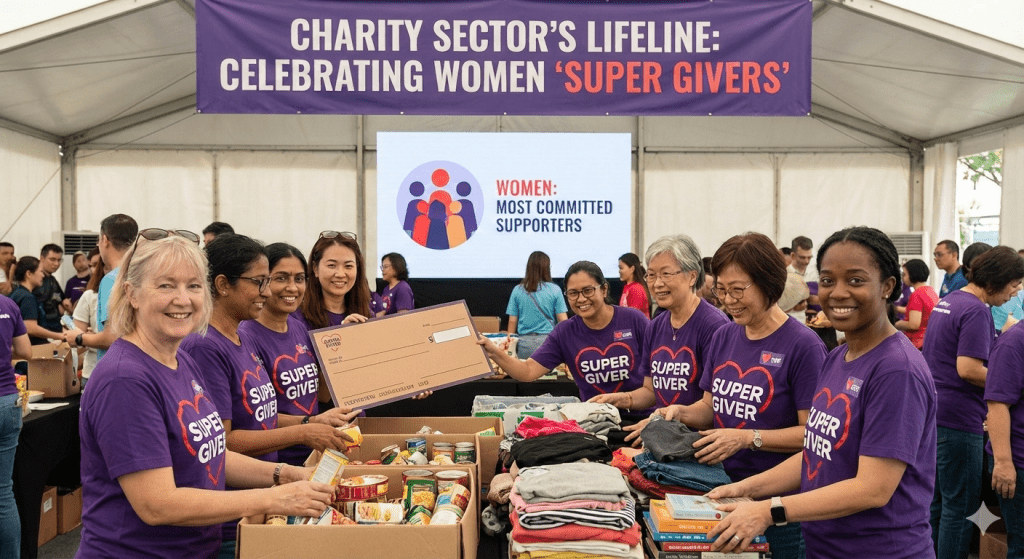
In an increasingly challenging landscape for UK charities, marked by a dwindling number of regular donors and a typical donation amount that has remained stagnant at £20 for seven years, understanding the most dedicated supporters has become a strategic imperative. These highly-engaged individuals, dubbed ‘Super Givers’ by the Charities Aid Foundation (CAF), represent a crucial lifeline for the sector. Now, new CAF research has uncovered a striking demographic trend within this cohort: women are significantly more likely than men to be Super Givers. This revelation is not merely a statistical curiosity; it presents a profound insight into the nature of modern philanthropy. For a sector navigating financial pressures and striving for resilience, understanding this gender dynamic is essential for shaping future fundraising strategies and ensuring sustainable support for the vital work charities do across the country.
The Anatomy of a Super Giver
The ‘Super Giver’ is a rare but powerful force in UK philanthropy. Defined by CAF as an individual who has undertaken five key charitable activities in the past year—donating money, giving goods, volunteering, fundraising, and sponsoring fundraising efforts—this group represents the pinnacle of supporter engagement. Comprising just over 1% of the UK population, or approximately 676,000 people, their commitment is exceptional. Critically for the sector, the research reveals a significant gender disparity at the heart of this group: 1.5% of all women qualify as Super Givers, compared to only 0.9% of men. This trend is further amplified by age. People over 65 are almost twice as likely to be Super Givers as 16-24-year-olds, and nearly half (49%) of this cohort are over 55. Women over 55 alone constitute nearly a third of this dedicated group, cementing their role as the backbone of multi-faceted charity support.
Geographically, these dedicated supporters are concentrated in ‘Super Giver Hot Spots’. In these locations, CAF found that, on average, 2.4% of residents fall into this category, exceeding the national rate by more than twofold. Exceptional levels of engagement are found in areas from North East Hampshire and Surrey Heath in the South East, to Wirral West and Sheffield Hallam in the North, and extending to Mid Ulster and South Down in Northern Ireland. These areas are often centres of generosity, with many—such as Wirral West and Sheffield Hallam—also appearing in the UK’s top 10 for the proportion of income donated to charity. This suggests these hotspots are often affluent suburban or commuter belt constituencies, connecting the geographical data back to the demographic profile of older, committed givers. But this demographic profile—older, and predominantly female—only tells part of the story. To truly engage these supporters, the sector must delve deeper into the psychological and social factors that explain this profound generosity gap.
Explaining the Generosity Gap: Empathy, Expectations, and Behaviour
To develop effective engagement strategies, charities must look beyond demographic data and explore the psychological and social forces that shape philanthropic behaviour. The pronounced gender gap among Super Givers is not accidental; it is rooted in deep-seated differences in motivation and societal expectations. Academic research provides critical insights into these drivers. A study by Willer et al. found that the giving gap is significantly mediated by women’s higher reported levels of empathy, which is a primary motivator for helping behaviour. This emotional connection to a cause often underpins women’s philanthropy. In contrast, the research suggests men’s giving can be more calculated, influenced to a greater degree by factors such as income and tax incentives.
Adding a further layer of complexity, research by Brañas-Garza et al. uncovers a social “perception gap.” Their work shows that women are not only more altruistic in practice but are also expected by society to be even more generous than they actually are. This suggests that ingrained social roles and gender stereotypes exert a powerful influence, shaping not only who gives but also the societal pressure placed upon them to do so. Understanding these deep-seated psychological and social drivers is not an academic exercise; it is the foundation for moving beyond generic appeals to create fundraising that resonates with the core motivations of the sector’s most vital supporters.
Strategic Imperatives: How Charities Must Adapt to Women’s Philanthropy
With the charity sector increasingly reliant on a smaller, more committed pool of donors, adapting fundraising practices to the preferences of its most dedicated supporters—predominantly women—is no longer a niche consideration but a strategic necessity. Traditional, one-size-fits-all approaches risk alienating the very individuals who provide the most holistic support. Understanding the distinct ways in which women approach philanthropy is key to unlocking their full potential.
Analysis of women’s giving behaviour highlights several key differentiators. Women tend to spread their giving across a number of organisations, which may lead fundraisers to underestimate their total philanthropic capacity if they only view gifts to their own institution. They also show a strong preference for collaboration, a trend evidenced by the growing popularity of giving circles, where contributions are pooled for collective decision-making. Furthermore, women often require more time and information to conduct their ‘due diligence’ before committing, seeking a deep understanding of an organisation’s mission and impact. Crucially, they expect meaningful engagement—to have their time and expertise valued—before being solicited for a financial gift, viewing philanthropy as a partnership rather than a transaction. This point is powerfully summarised by fundraising expert Martha Taylor, as quoted by her colleague Kathleen Loehr: “When you approach women like men, you lose the women. When you approach women as they prefer, you get the women AND the men.” This highlights a fundamental truth: fundraising strategies designed with women’s preferences in mind are not just beneficial for engaging women; they create a more thoughtful, transparent, and relationship-focused approach that elevates fundraising practice for all donors.
Voices and Viewpoints: Community Connection and the Bigger Picture
Statistical trends provide the ‘what’, but personal perspectives and sector analysis reveal the ‘why’. Grounding the data in real-world experience illuminates the powerful connection between giving and community. Philippa Cornish, Head of Giving at the Charities Aid Foundation, stresses the importance of recognising these dedicated individuals, particularly in the current climate. “At a time when charities are facing increased challenges and far fewer people are regularly donating to charity, it’s vital to celebrate those who go the extra mile to support them,” she states. Cornish connects this deep engagement directly to a stronger social fabric, noting, “When people engage with charities, they feel more connected to their local area, more satisfied and more optimistic.”
This sentiment is embodied by Lois Shrimpton, a retiree from Reigate, one of the UK’s top Super Giver hotspots. Lois volunteers at the Stripey Stork baby bank, supports a local foodbank, and helps at her grandchildren’s school. To illustrate the multifaceted nature of her support, she has also organised discos and completed multiple fun runs. Her commitment provides a tangible, human face to the Super Giver profile. For her, the motivation is clear and profound in its simplicity. “Helping other people gives me a good feeling,” she says, offering advice to others: “Go in, knock on charities’ doors and learn about what people are up to in your community.”
Conclusion: Securing the Future of Giving
The evidence is clear: women, particularly those over 55, form the backbone of the UK’s most committed cohort of charity supporters. In a climate of shrinking donor pools and rising operational costs, this finding is of paramount strategic importance. It signals an urgent need for the sector to move beyond generic fundraising appeals and develop more nuanced, relationship-based engagement strategies that align with the collaborative and due diligence-driven approach favoured by many female philanthropists. This is the immediate priority. However, for long-term resilience, the sector must also look to the other side of the equation. True sustainability will depend not only on better serving existing supporters but also on finding new ways to close the generosity gap by increasing men’s engagement. Exploring messaging that frames giving in terms of a “shared fate”—highlighting the societal benefits for all—may offer a promising avenue to broaden the circle of committed givers and secure philanthropy’s future in the UK.