All Aboard for Better Mental Health: How Mobile Outreach is Reaching the UK’s Most Isolated
Meeting the Mental Health Crisis Where It Happens
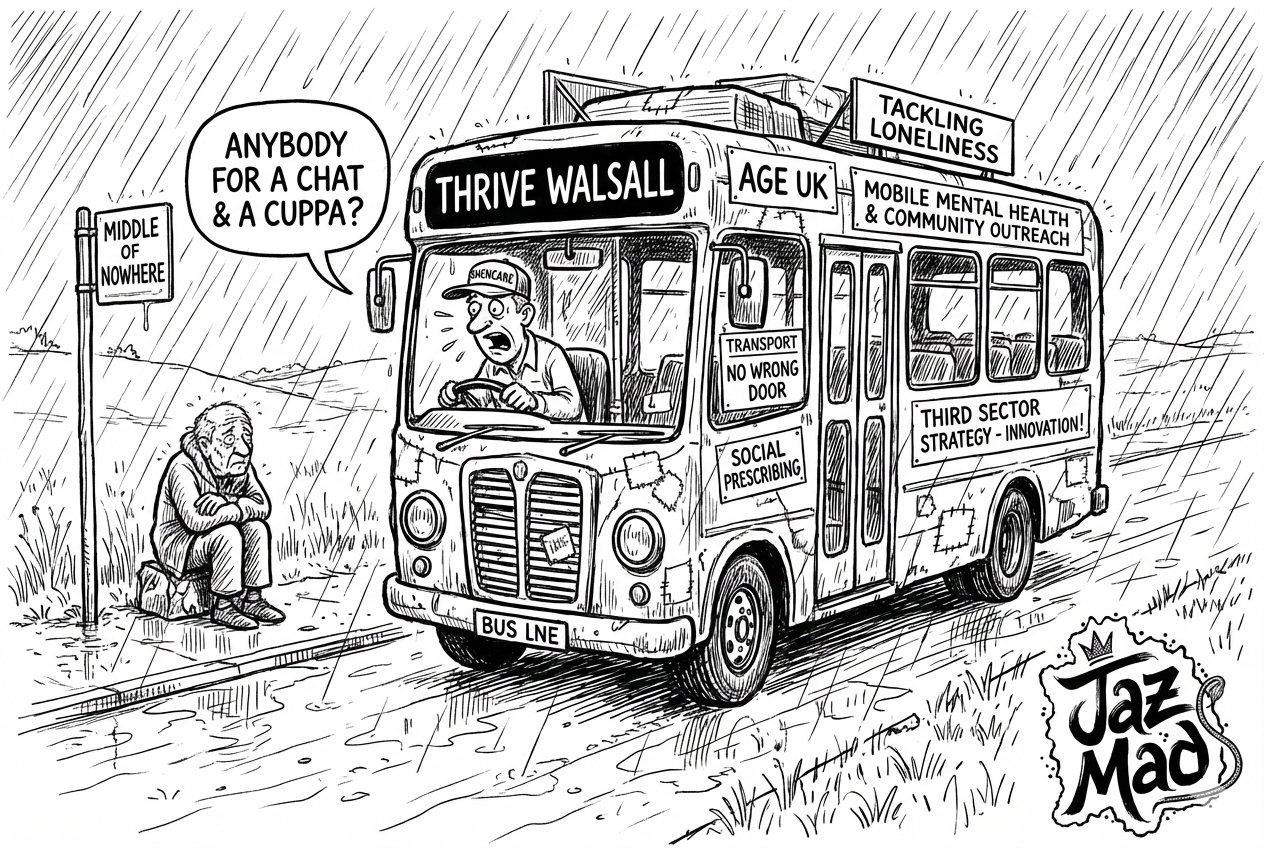
Across the United Kingdom, social isolation and formidable barriers to mental health support remain a profound challenge. For many, particularly older people who lost confidence leaving their homes after the COVID-19 pandemic or those living in disconnected communities, accessing help can feel impossible. In response, a powerful and innovative approach is gaining ground: taking services directly to the people who need them most. This is not about building new centres, but about mobilising support. In Walsall, the ‘Thrive’ Mobile Unit, a converted bus, parks in accessible community spots, offering a warm drink and a non-judgmental chat. This simple act of meeting people where they are demonstrates the sector’s dedication and can inspire pride among UK stakeholders in their collective efforts to improve mental health support.
The US Blueprint: Why Mobile Clinics are Gaining Traction
To fully grasp the potential of mobile mental health services in the UK, it is valuable to analyse the more established model in the United States. There, mobile outreach has become a recognised response to systemic barriers in healthcare access, offering a blueprint of both strategy and impact.
In the US, mobile clinics are considered an effective solution precisely because they overcome the core challenges that prevent people from seeking help. Analysis reveals they directly counter issues of low availability and long waits for traditional services, particularly in rural areas. Furthermore, they help to dismantle the powerful barrier of social stigma that keeps individuals away from conventional clinics. For many, the problem is even more fundamental; a survey by Mental Health America (MHA) found that almost 30% of survey participants reported that they simply do not know where to seek mental health services.
The scale of the issue in the US is significant. The 2023 Mental Health America survey showed that around 55% of adults are not receiving any kind of treatment for their mental health issues. In response, an estimated 2,000 medical vehicles now operate across the country, offering a patient-centric, preventive alternative. While this model is proven across the Atlantic, its real value for a UK audience lies in understanding how these principles are now being successfully applied and adapted within British communities.
From Theory to the British High Street: Mobile Outreach in Action
The strategic adaptation of the mobile outreach model for the UK context is proving to be more than just a theoretical exercise. It is a tangible strategy being piloted and evaluated by organisations nationwide to tackle loneliness and improve mental wellbeing, with promising results that can inspire confidence in future scaling.
A prime example is the ‘Thrive’ Mobile Unit in Walsall. This converted bus operates in highly accessible community locations, such as bus stations or near food banks, creating a visible and approachable presence. Its offer is simple yet effective: a welcoming, non-judgmental space for a chat and a hot drink. This low-barrier approach encourages people who might never step into a formal service setting to engage.
Crucially, the Walsall pilot generated vital operational learning. The initial expectation was that staff would provide in-depth support sessions on the bus itself. However, the practical limitations of space and privacy quickly became apparent. The team adapted, repositioning the bus as a powerful tool for initial engagement, confidence-building, and expert signposting. As one project stakeholder noted, the model’s strength lies in its ability to connect with people and then guide them towards the right help:
“It’s amazing for engagement, confidence building and exploring those issues, but then we should be passing on to a specialist service”
This project is not an isolated experiment. The Department for Transport’s “Tackling Loneliness with Transport” programme highlights a growing trend of using transport-based solutions to foster social connection. This is a broad church of interventions, from creating destinations with community minibuses in rural Yorkshire (“Nidderdale Befriending”) to rebuilding confidence on existing routes with volunteer-led journeys (“Travelling Companions”). These projects show that the operational reality of putting support on the road has a profound, personal impact on the individuals it is designed to serve.
The Human Impact: “It Just Makes a Massive Difference to Your Mental Health”
Beyond the logistics of routes and timetables, the ultimate measure of these projects’ success is the tangible, positive change they bring to people’s lives. The stories and experiences of beneficiaries from across the UK provide compelling evidence of their impact, fostering a shared sense of purpose among stakeholders committed to making a difference.
Increased Confidence and Autonomy
A recurring theme is a dramatic increase in personal confidence, particularly around travel and independence. For many beneficiaries, the transport element was not just about getting to a destination, but an intervention in itself—a tool for rebuilding the confidence and skills needed for independent travel, which, in turn, unlocked other wellbeing outcomes. For beneficiaries of Age UK’s “Travelling Companions” pilot, a structured, supportive approach to re-engaging with public transport was life-changing. One participant described their journey from fear to freedom:
“The first trip, I was really, really nervous, and the second trip, I wasn’t so nervous, and then after the second trip, I started going on my own.”
This newfound autonomy was echoed by users of Shencare’s community transport, who felt relieved at no longer having to depend on family members for lifts. Participants in the “Tarka Line Creatives” project, which organised and supported train journeys, also reported a significant boost in their ability to use public transport independently after the programme finished.
Reduced Loneliness and New Social Connections
These services are powerful antidotes to loneliness. Participants in the “Walking Connects” groups and the “Let’s Chat” community hubs consistently reported making new friends and feeling part of a supportive community. The simple act of a shared journey or a regular meeting creates a natural environment for connection. For many, this contact is a lifeline. As one beneficiary of the Shencare service explained:
“Loneliness is an awful thing, it really, really is, and this stops people being lonely.”
Feeling Valued and Cared For
This model fosters a sense of being seen and valued. A US-based study found that patients deeply appreciated the “familiar environment, convenient location, and approachable staff” of mobile clinics, feeling “seen and cared for” when a service came to their doorstep. This sentiment is mirrored directly in the feedback from UK projects, where beneficiaries of the Shencare service consistently praised the friendly, helpful drivers who were seen as a core part of the social and caring aspect of the trip. This approachable, human connection is fundamental to building the trust needed for individuals to take the first step towards seeking support.
These personal stories provide compelling proof of the model’s effectiveness, carrying significant strategic implications for the wider charity sector.
A New Model for the Sector: Implications and Key Learnings
The success of these pilot schemes offers a valuable set of strategic lessons for charity leaders, trustees, and commissioners considering new models for community outreach and mental health support.
First and foremost is the critical importance of multi-agency partnerships. The Walsall ‘Thrive’ Mobile Unit, for example, did not operate in a vacuum. Its collaboration with partners like Citizens Advice and its integration into the wider “No Wrong Door” network—a coordinated system in which partner organisations work to prevent individuals from falling through gaps in services—transformed the bus from a standalone service into an effective, informal gateway to a comprehensive system of specialist support. This demonstrates that a mobile unit can be the vital first rung on a ladder of care.
There are, of course, significant financial and operational considerations. Data from the US suggests an average annual operating cost for a mobile clinic is around $275,000, providing a useful benchmark for the level of investment required. However, this cost must be weighed against a powerful value proposition. As staff at Shencare Community Transport noted, their service reduces the burden on other statutory bodies like social services by increasing people’s independence. These mobile projects prevent crises, lessen suffering, and ultimately prove more efficient by reaching individuals who would otherwise never engage with mainstream services.
Based on the evidence from successful UK pilots, several core elements are essential for effective implementation:
- Local Knowledge: Being deeply rooted in the community to inform strategic placement, such as positioning the mobile unit near a food bank to connect with individuals who may have multiple, intersecting needs.
- Flexibility and Adaptability: The willingness to evolve the model based on real-world experience, as demonstrated by the Walsall bus project shifting its focus from on-board counselling to engagement and signposting.
- A Welcoming Approach: The disarming power of a simple, non-judgmental offer like a “cuppa” and a chat cannot be overstated. It is the key that unlocks the door to building trust.
- An Excellent Staff Team: Success hinges on well-trained, empathetic staff and volunteers who can “talk to absolutely everyone” and think on their feet to provide the right support.
These practical lessons provide a clear framework for replication but also raise the crucial question of long-term viability and the future direction of this innovative approach.
The Road Ahead from Pilot to Mainstream Provision
The evidence is clear: mobile and transport-based initiatives are a proven, powerful, and deeply person-centred tool for tackling loneliness and improving access to mental health support in the UK. By meeting people in familiar, non-clinical settings, they successfully engage individuals who are often invisible to traditional services. They build confidence, foster connection, and serve as a crucial, trusted link to a wider network of care. However, a persistent challenge across these successful UK projects is the precarious nature of short-term pilot funding, which hampers these vital services’ ability to become truly embedded within the communities they serve.
The call for sustainable, longer-term funding is therefore paramount. The road ahead requires a decisive shift from celebrating innovative experiments to strategically integrating them into our core infrastructure. The proven ability of these mobile services to act as effective triage and signposting hubs provides the key evidence that commissioners need. It positions them not as a charitable ‘extra’, but as an essential, cost-effective component of the statutory care pathway. The next step is to embed these models into local commissioning plans, transforming them from promising pilots into a mainstream, indispensable part of the UK’s community mental health provision.