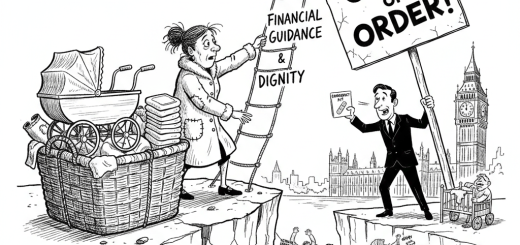
Charities Urge Government to Streamline Gift Aid as £560 Million Goes Unclaimed Annually.

A staggering £560 million in Gift Aid is going unclaimed by UK charities every year, a critical loss of funding that sector bodies are warning is undermining essential services for communities across the country. In a unified call for government action, leading organisations, including the Charity Finance Group (CFG) and the Charity Tax Group (CTG), are urging a complete overhaul of the tax relief scheme. They argue that cumbersome, outdated, and overly complex administrative processes are preventing charities—particularly smaller organisations—from accessing this vital income stream. With the sector facing unprecedented demand and squeezed finances, the campaign for modernisation has taken on a fierce urgency, framing the unclaimed millions not as a statistical anomaly, but as a solvable funding crisis holding back civil society.
Gift Aid stands as one of the UK’s most significant tax reliefs, generating £1.6 billion annually for charities and community amateur sports clubs. It is a crucial source of mainly unrestricted income, allowing organisations the flexibility to fund core services and develop new programmes where the need is greatest. The potential loss of this funding would be, in the words of one finance director surveyed by the CFG, “disastrous.” The survey revealed that if Gift Aid were no longer available, charities would be forced to drastically increase fundraising efforts, cut back on services, and nearly 20% would have to consider making staff redundant. The £560 million “Gift Aid gap” is not a new problem; it was first identified in government-commissioned research in 2016, yet eight years on, sector bodies are confident that charities are still missing out on this transformative sum due to deep-seated systemic barriers.
This failure to claim is not born from indifference, but from significant systemic hurdles. The primary obstacle is administrative burden, with one charity leader describing the claiming system as an “old and difficult process” that is “very manual and has so many steps.” A CFG survey of 100 charity professionals highlighted widespread frustration with HMRC’s web portal, citing repetitive questions, clunky interfaces that cannot recognise that “a lower case letter is the same as an upper case one in postcodes,” and the need to “split our claims over multiple forms” because a single submission file cannot handle enough entries. These barriers disproportionately affect smaller organisations. While large charities report claim rates of 85-95%, rates for small charities can be as low as 20-40%. This disparity is compounded by a technology gap; with 72% of small charities struggling digitally due to squeezed finances, they are often locked out of the very tools that could simplify the process. Alongside this are the twin challenges of rule complexity—such as the 25% benefit limit on memberships, which some charities find so hard to monitor they “do not bother to claim”—and low awareness of schemes like the Gift Aid Small Donations Scheme (GASDS), which nearly half of charities surveyed had not used.
In response, the sector has united to champion clear, actionable solutions. A core recommendation is to “streamline and automate the gift aid claims process,” a call echoed by the CFG, CTG, and, crucially, the government’s own Social Impact Investment Advisory Group (SIIAG). In its final report, the SIIAG positioned Gift Aid reform as a key part of a national strategy to grow the UK’s impact economy and unlock “an estimated £106bn in assets” for civil society. Specific proposals include creating a “universal Gift Aid Declaration” to “reduce the administration burden” and raising the £30 limit on GASDS to make it more accessible. Spearheading this push is the “Future of Gift Aid” project, a cross-sector initiative advocating for an automated system using API integration with HMRC to simplify validation. This vision is being realised by technology providers now offering platforms that automate the entire lifecycle of a Gift Aid claim—from capturing donor declarations at the point of admission or sale, to tracking donated goods, managing donor records, and generating compliant reports for HMRC.
Despite this clear and unified vision for reform, there is growing frustration at the perceived gap between the urgency of the sector’s calls and the pace of government action. While HMRC has taken steps over the years, such as introducing online filing and the Small Donations Scheme, sector leaders feel these measures do not go far enough. Richard Bray, Chair of the Charity Tax Group, captured the mood, noting that while the ideas for automation align with HMRC’s own vision for a modern tax system, “sadly, it seems that charities are low down the pecking order for the investment that is needed to make this happen.” This sentiment was reinforced by Nick Cook of the People’s Postcode Lottery, who, highlighting the hundreds of millions in unclaimed funds, urged the government to “think outside the box,” describing the reform of Gift Aid as a “very simple change” that is not being taken seriously enough. The result is an impasse, with a transformative funding stream locked behind a wall of bureaucracy.
The £560 million in unclaimed Gift Aid represents more than a missed financial opportunity; it signifies undelivered services, unsupported communities, and unrealised potential across the UK. The path forward, as articulated with a single voice by the charity sector, is not a radical reinvention but a pragmatic modernisation of a system no longer fit for purpose. The solution lies in a concerted effort to simplify complex rules, automate cumbersome processes, and embrace the technological tools that are already available. With the sector united behind a clear set of proposals and the technology ready to be deployed, the final remaining barrier is the political will to prioritise this reform. Unlocking this funding would be a transformative act, strengthening the financial resilience of thousands of charities and, in turn, the communities they exist to serve.