A Changing of the Guard
What New Leadership Means for UK Charities in Crisis
A Sector in Transition
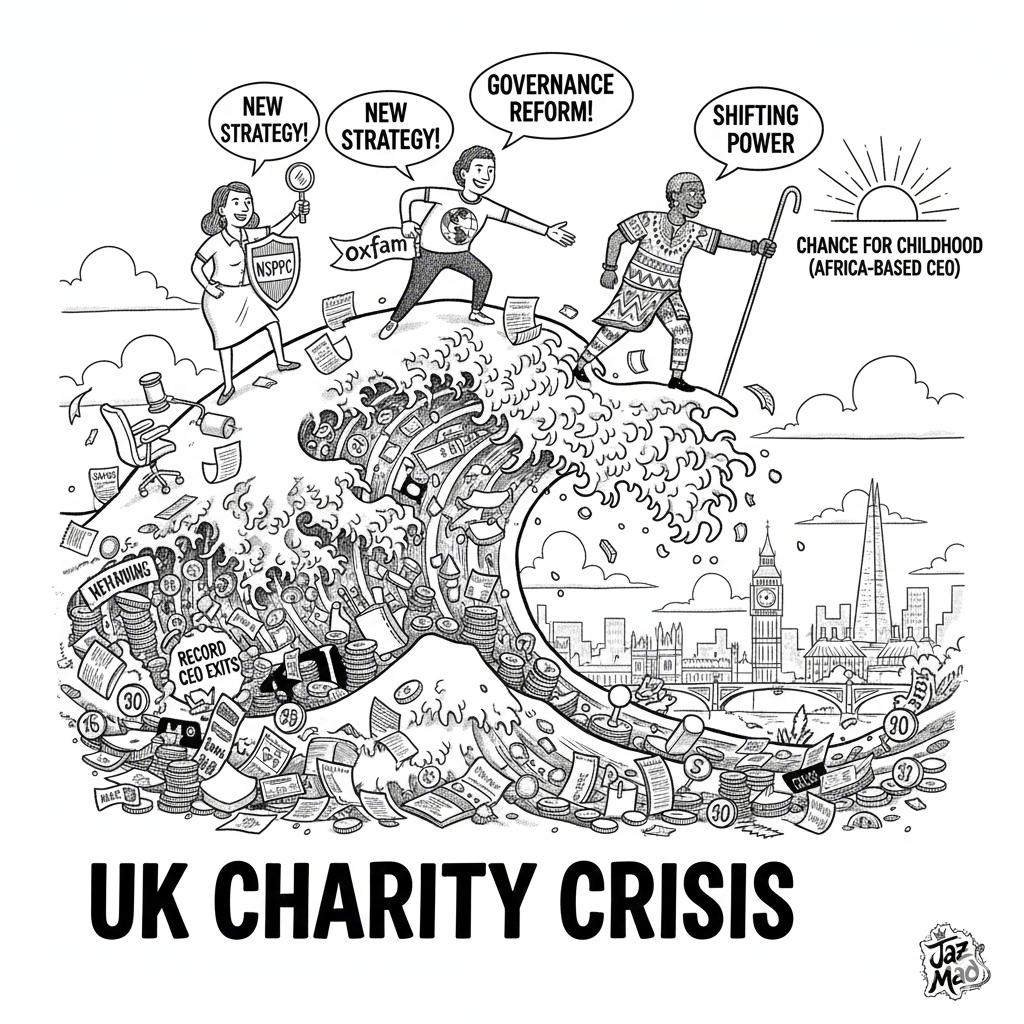
Across the UK charity sector, a significant wave of high-profile leadership appointments is reshaping the landscape. From the NSPCC to Oxfam GB, new faces are taking the helm at a critical juncture. This is far more than a routine reshuffle. It comes against a backdrop of unprecedented challenges, with CEO departures hitting record levels in 2025 and organisations squeezed between the dual pressures of soaring operating costs and a relentless rise in demand for their services. For a sector that has become the frontline of support for so many communities, this period of transition is fraught with both risk and opportunity. The central question is clear: how do these new appointments influence the sector’s strategic direction, resilience, and capacity to adapt to ongoing challenges?
A Changing of the Guard
The recent leadership changes span the entire sector, touching major household names, vital infrastructure bodies, and smaller, community-focused organisations alike. This widespread renewal indicates a sector actively seeking fresh perspectives and strategic recalibration amid immense external pressures, which could influence sector collaboration, policy advocacy, and overall sector cohesion.
This wave of change is being felt at the highest levels, with the NSPCC bringing in Tracey Pritchard to spearhead its new Engagement and Fundraising directorate. Governance is also a key focus, evidenced by Oxfam GB’s appointment of three new trustees, including finance expert Andrew Tivey and Refuge CEO Gemma Sherrington. Meanwhile, infrastructure bodies like the NCVO are also recalibrating, with CEO Kate Lee reshaping her entire executive team. The changes extend to specialist and community-based charities, with Ygam appointing Emily Tofield as its new CEO and Amanda Hunt taking the reins as General Manager at Friends for Leisure. Further appointments see Nicolas Breteau joining Rays of Sunshine as a trustee, and in a landmark move, Chance for Childhood has named Ven Nyamondo as its first Africa-based CEO.
This influx of talent, experience, and strategic thinking is not merely about filling vacancies; it is a direct response to the complex and demanding environment in which these charities now operate.
Leading Through the Pressure Cooker
To appreciate the scale of the task these new leaders face, it is essential to understand the strategic environment they are entering. The UK charity sector is currently a pressure cooker, defined by a perfect storm of intense financial strain and a crisis in leadership retention that is forcing boards to abandon “business as usual” recruitment.
Recent analysis reveals a stark picture. The government and nonprofit sectors saw the highest number of CEO exits in the first half of 2025, a trend set to continue, with research showing that a third of charity CEOs are likely to leave their jobs within the next two years. This churn raises questions about the sector’s ability to maintain leadership quality and stability during such turbulent times. A 2024 survey found that while 73% of nonprofit leaders reported increased demand for their services, a staggering 81% faced higher operating costs. The 2025 Salary Survey by recruitment specialist Harris Hill reveals that while CEO pay remains ‘reassuringly tethered to the ground,’ organisations now find it unlikely they can hire a CEO for less than [£60,000], further straining budgets and leadership continuity.
In this climate, boards are actively hunting for leaders with demonstrable crisis-management and commercial skills. The skills of new appointees directly address these pressures, reflecting a growing demand for “future-ready expertise” to navigate turbulence. The appointment of Andrew Tivey to Oxfam, with his “significant experience in finance, audit, and risk,” aligns perfectly with the sector’s need for robust financial stewardship. Similarly, Nicolas Breteau brings a “wide and influential corporate network” to Rays of Sunshine, a crucial asset for building the cross-sector partnerships essential for sustainable fundraising. This urgent need to import new skills in finance and partnership-building is not happening in a vacuum; it coincides with a deeper, sector-wide conversation about who holds power and whether traditional leadership structures are fit for a more equitable future.
Shifting Power and Cracking Ceilings
Beyond navigating immediate crises, this wave of appointments also reflects deeper strategic shifts within the sector regarding power, diversity, and inclusion. Organisations are not just looking for new skills, but for new models of leadership that better reflect the communities they serve. These changes aim to inspire confidence that the sector is moving towards a more inclusive and representative future.
The most striking example is the appointment of Ven Nyamondo as Chance for Childhood’s first Africa-based CEO. This move represents a deliberate effort to decolonise aid and empower local leadership. As the charity’s chair, Nicoletta Gopsill-Piccolrovazzi, stated:
“Other organisations are talking about shifting the power, and we are amongst the first to appoint an African CEO on the continent.”
This trend also extends to gender dynamics. The statistics remain challenging: a Pro Bono Economics report highlights that, while the charity workforce is 68% female, men outnumber women as trustees by two to one, and only 35% of the CEOs of the largest charities are women. However, the recent appointments suggest a positive, if nascent, shift. A significant number of the key new appointees are women, including Tracey Pritchard (NSPCC), Emily Tofield (Ygam), and Gemma Sherrington (Oxfam trustee). The Fundraising Regulator also bolstered its board with the appointment of Josephine Swinhoe and Barbara Kasumu. This trend, while welcome, underscores the long road ahead to achieving genuine gender equity in the sector’s most powerful roles.
While these moves to diversify leadership are a positive sign of internal reform, the sector’s resilience also depends on its ability to manage external perceptions and prevent the damaging leadership failures that have recently plagued it.
Governance and conduct are now central to the sector’s reputation and future stability.
Recent high-profile failures serve as a reminder that effective oversight and ethical leadership are essential. Strengthening governance structures can help rebuild trust and demonstrate the sector’s commitment to integrity and accountability.
The focus on leadership renewal has been sharpened by recent high-profile failures, which serve as a stark reminder of the critical importance of effective governance and board oversight. The resignation of Matthew Gould as CEO of the Zoological Society of London (ZSL) amid an investigation into allegations of “unacceptable workplace behaviour,” and the resignation of BBC Children in Need chair, Terry Duddy, following a conviction for causing serious injury through careless driving, have put conduct firmly in the spotlight.
These incidents underscore that a leader’s character is as vital as their strategic acumen and highlight the sector’s response: an intensified focus on creating “purpose-driven boards” that are diverse in skills, experience, and background. As a recent Harris Hill report noted, a “lack of alignment between trustees on key priorities” can seriously hamper an organisation’s ability to recruit and retain effective leaders. Now, more than ever, boards must be intentionally composed to provide both robust support and rigorous oversight, ensuring that leadership embodies the organisation’s values.
These governance challenges, coupled with the immense operational pressures, mean the sector’s new cohort of leaders face a trial by fire, raising profound questions about the dawn of a new era.
New Leaders for a New Era?
The UK charity sector is navigating a period of profound challenge, marked by intense operational pressure and significant leadership churn. Yet, the latest cohort of appointments suggests a clear strategic direction. Organisations are actively seeking leaders with the resilience, financial acumen, and diverse experience needed to thrive in uncertainty. There are encouraging signs of a move towards more inclusive leadership structures, with a notable increase in female appointments and a landmark decision to shift power to an Africa-based CEO.
The crucial questions, however, remain unanswered. Will this new generation of leaders succeed in stabilising their organisations and securing their futures amidst ongoing economic volatility? More profoundly, is this wave of diverse appointments the beginning of a long-term trend that will fundamentally reshape the face of UK charity leadership? The success of the entire sector may depend on the answer. Supporting these new leaders is not just an organisational priority; it is a collective responsibility for anyone invested in a thriving, effective, and equitable third sector.