New Funding Lifeline for Migrant-Led Charities in a Hostile UK Climate
A raft of new funding opportunities is offering a crucial lifeline to migrant-led organisations, providing a beacon of hope amid an increasingly hostile political and legislative environment in the United Kingdom.
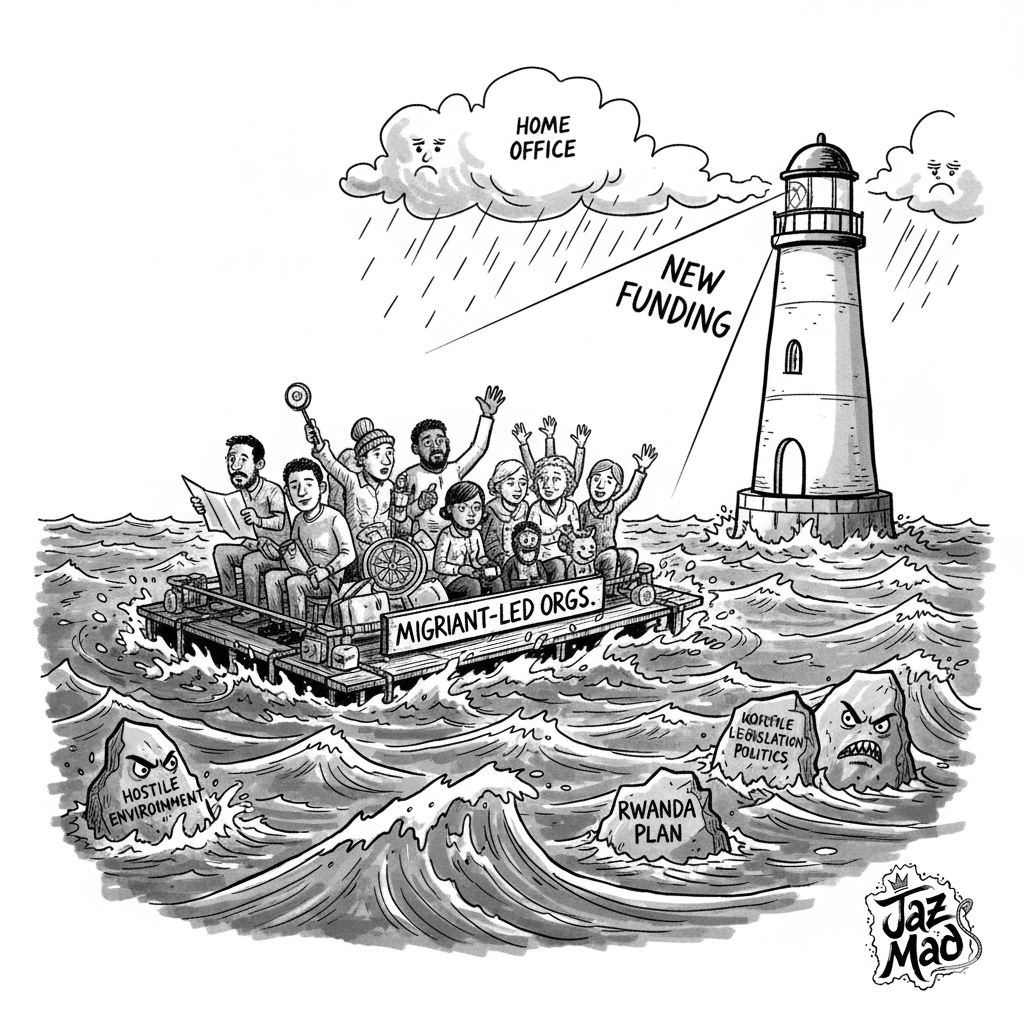
A Turning Point for Migrant-Led Organisations?
For charities supporting migrants, refugees, and people seeking asylum, the past few years have been defined by a relentless series of legislative challenges. The passing of the Nationality and Borders Act, followed swiftly by the controversial Illegal Migration Act, has created a deeply hostile environment, eroding basic rights and effectively ending the right to claim asylum for many in the UK. This backdrop of systemic hostility has placed immense strain on the organisations providing vital frontline support, often leaving staff and the communities they serve with hope “hanging by a thread.”
Against this bleak canvas, the announcement of significant new grant programmes represents a vital opportunity that can inspire migrant-led organisations to feel recognised and motivated to seek support. The emergence of large-scale, dedicated funding streams—both from Europe and within the UK—signals a strategic shift towards empowering organisations led by people with lived experience. This is more than just financial relief; it is a validation of the principle that those who have navigated the immigration system are best placed to design and deliver effective, humane, and just solutions. For the UK charity sector, this is a critical opportunity to build a more resilient, equitable, and impactful response to one of our era’s most pressing social justice issues.
Unpacking the Opportunities
In a sector characterised by chronic underfunding and intense competition for resources, understanding how to strategically approach these new, large-scale funding streams can empower grassroots organisations. These opportunities offer the chance to scale impact, strengthen infrastructure, and build sustainable support systems, helping organisations feel more confident and in control of their growth and resilience.
One of the most substantial new programmes is the EU’s Asylum, Migration and Integration Fund (AMIF), which has opened a 2025 call for proposals that represents a vital opportunity for UK-based charities to form transnational partnerships.
Asylum, Migration and Integration Fund (AMIF) 2025 Call
- Total Call Budget: The fund has an available budget of EUR 34,000,000 distributed across five key areas.
- Priority Areas: The call focuses on five specific topics:
- Support measures for migrant women’s social and economic integration.
- Improving migrants’ access to healthcare.
- Enhancing digital skills among migrants.
- Developing complementary education pathways for people in need of protection.
- Strengthening the protection of children in migration, particularly regarding age assessment.
- Funding Levels: Grant amounts vary by topic. For example, projects focusing on support for migrant women (WOMEN) and access to healthcare (HEALTH) can request between EUR 1,500,000 and EUR 3,000,000.
- Key Dates:
- Call Opening: 3 April 2025
- Submission Deadline: 16 September 2025
- Eligibility for UK Organisations: While the fund is primarily for EU Member States, the regulations explicitly state that a legal entity from a third country, such as the UK, is eligible to participate. The key requirement is that the UK organisation must be part of a consortium of at least two independent entities, with at least one established in an EU country. This makes the AMIF call a crucial catalyst for building cross-border collaborations.
Initiatives like AMIF are vital, but their impact is magnified when complemented by domestic programmes that champion a progressive, trust-based funding model in the UK.
The UK Context: Championing Lived Experience Amidst Hostility
While European funds offer opportunities for scale, UK-specific initiatives are modelling a more progressive and responsive approach to grant-making. By placing power and resources into the hands of those with direct experience of the immigration system, these initiatives aim to foster pride and confidence in the sector’s ability to lead change and challenge hostile narratives.
A leading example is the Justice Together Initiative (JTI), a collaboration launched in 2020 with a decade-long vision to ensure people can access justice fairly and equally. It has become a cornerstone of support for the UK’s immigration advice and influencing sector. Jen Ang, Chair of the JTI Grants Committee, reflects on the profound challenges of the past year, noting how hope has been essential in carrying partners through a period of intense hostility. She highlights the sector’s resilience and tangible successes, celebrating that grant partners were instrumental in “defeating the government’s plans to send people to Rwanda.”
This success is rooted in the initiative’s core values. Dylan Fotoohi, a member of the JTI Grants Committee, underscores the importance of the fund’s structure. He highlights that adopting trust-based, lived experience-led models, such as involving community members in decision-making, enhances application strength and project relevance, making organisations more competitive for funding.
The impact of this approach is clear. JTI’s 2023 impact report highlights its significant achievements:
- 9,881 people received advice through JTI-funded posts.
- 52 advice positions were funded, with 32 held by individuals with lived experience of the immigration system.
- 21 influencing positions were funded, with 20 held by people with lived experience.
The work of JTI demonstrates the transformative power of a funding model built on trust, lived experience, and long-term partnership. However, this positive example exists within a global funding landscape that systematically fails to provide adequate resources to those on the front lines.
The Global Picture: A Ripple, Not a Wave
The need for initiatives like AMIF and JTI is a direct consequence of a global, systemic failure to resource refugee and migrant-led organisations (RLOs) adequately. These groups are the first responders and the beating heart of community support, yet they are consistently overlooked by traditional funding structures.
A recent analysis by The New Humanitarian reveals a stark reality: RLOs received just $26.4 million in traceable humanitarian and development funding in 2022. This figure pales in comparison to the broader aid sector’s localisation goal, set in the 2016 Grand Bargain, which aimed to direct 25% of funding to local organisations—a target that remains largely missed.
Sarah Smith, who leads the refugee programme at the Hilton Foundation, actively debunks the common justifications for this disparity. She argues that the perception that RLOs are inherently “riskier” is unfounded, and that the idea that they “can’t absorb funding” is a misperception. Smith clarifies that when provided with flexible, long-term grants that include operational support, these organisations can and do grow quickly to meet community needs.
While focused on the U.S. philanthropic landscape, a recent landmark report from the National Committee for Responsive Philanthropy (NCRP), aptly titled “A Ripple, Not a Wave,” offers a powerful and analogous warning for the UK and European sectors. The report finds that while total philanthropic giving has increased, the share of that funding going to the pro-immigrant and pro-refugee movement has actually shrunk. As foundations have grown richer, the movement’s slice of the pie has become smaller, leaving frontline groups to shoulder the most critical work with the fewest resources.
Understanding these systemic barriers is crucial, as it underscores the fierce competition for the available funding. For organisations on the ground, this reality means that a flawless, strategically aligned application is not just an advantage—it is a prerequisite for survival.
How to Secure Funding
In a highly competitive environment, a well-crafted grant proposal is essential. Even the most impactful organisations can be let down by common application mistakes. Avoiding these pitfalls can significantly increase the chances of securing the funding needed to deliver vital services.
Based on insights from professional grant writers, here is a tactical checklist for strengthening your proposals:
- Be Grant Ready: Success begins before you start writing. Funders look for well-prepared organisations with a robust and diverse fundraising plan beyond grants alone. Relying solely on grants can be a red flag; demonstrate that your organisation is sustainable and strategically prepared to compete.
- Do Your Homework, Then Pick Up the Phone: Thorough research is the lifeline of a successful proposal. Meticulously review a grantmaker’s guidelines, website, and published financial information. But don’t stop there. Grant-making is about relationships; a preliminary phone call to a foundation can provide invaluable insight, demonstrate your commitment, and begin building the long-term connection critical for long-term funding.
- Tailor, Don’t Copy-Paste: A generic, one-size-fits-all proposal is a common and critical mistake. Each application must be a unique document tailored to the specific funder. Show how your project aligns not only with their stated priorities but also with their unique values and goals.
- Prove Your Impact, Don’t Just State It: A proposal fails without a clear, measurable theory of change. Articulate what you plan to do, why it is effective, and how you will measure success. This requires clear goals and objectives, a detailed evaluation plan, and a precise, realistic budget in which every pound requested is justified in the narrative.
- Plan for Sustainability: Funders invest in long-term impact, not just short-term activities. Your application must clearly explain how the project’s benefits will continue beyond the grant period. A strong sustainability plan demonstrates foresight and a commitment to lasting change.
A Call for Sustained and Systemic Change
The emergence of new funding opportunities, like the AMIF 2025 call, offers a welcome and much-needed injection of resources for organisations supporting migrants and refugees. These grants provide a tangible pathway for growth and impact, particularly for those championing lived experience within the UK. However, these positive developments must be viewed within the broader context of systemic underfunding and a political climate that remains deeply challenging.
The crucial takeaway is that the shift towards trusting and directly resourcing migrant-led organisations is not merely a funding trend but a necessary evolution for a more effective, equitable, and just charity sector. Models like the Justice Together Initiative prove that when power is delegated and lived experience is valued, organisations can achieve remarkable success even in the face of adversity. The challenge now for funders, policymakers, and sector leaders is to ensure that this current “ripple” of progressive funding builds into a self-sustaining “wave” of systemic support, transforming the landscape for generations to come.