Beyond Transactional Giving: CIOF’s Blueprint to Reshape UK Philanthropy for 2035
A Sector at a Crossroads
The UK’s charity sector faces significant challenges, and acknowledging these struggles can foster a sense of shared purpose and motivate collective action among sector leaders. Reflecting a trend seen across the Atlantic, where a late 2024 study from the Urban Institute found US nonprofit leaders grappling with financial instability and rising demand, the UK’s charity sector faces its own period of intense pressure. It is against this turbulent backdrop that the Chartered Institute of Fundraising (CIOF) has launched ‘Philanthropy 2035’, an ambitious, decade-long project designed not merely to weather the storm, but to chart a new course. This initiative represents a critical, long-term strategy to bolster sector growth, fundamentally reshape the future of giving, and build a more resilient and generous UK.
The Vision for 2035: Deconstructing the CIOF’s New Blueprint
The ‘Philanthropy 2035’ project is not a minor course correction but a fundamental re-examination of major donor fundraising in the UK. Prompted by the significant headwinds facing the sector, the initiative seeks to move beyond short-term fixes and establish a robust framework for the next decade. At its heart, the project aims to answer two pivotal questions for its members: “What do charities want philanthropy to look like in 10 years?” and “How can government, charities and other stakeholders work together to make it happen?”
Structured as a multi-stage research initiative, the project’s first phase, titled “The State of UK Philanthropy,” has just been released. Its findings are based on a series of in-depth, semi-structured interviews with more than 30 directors and heads of philanthropy from across the CIOF’s membership community. While the project’s goals are aspirational, its initial research provides a sobering diagnosis of the challenges that must be overcome first.
The Diagnosis: Unpacking the Barriers to Philanthropic Growth
Before building a new future for major giving, the CIOF’s research first had to diagnose the fundamental challenges holding back philanthropy programmes right now. The findings from interviews with charity leaders paint a clear picture of the cultural, professional, and narrative hurdles that must be surmounted.
A central theme emerging from the interviews was the urgent need for a cultural shift away from “transactional giving” and towards long-term, “relationship-based fundraising.” This approach, interviewees argued, focuses on providing donors with a tailored and meaningful experience that fosters mutually beneficial partnerships, ultimately unlocking larger, multi-year gifts and improving retention. However, achieving this requires significant buy-in from trustees and senior leaders, who often do not understand the time and resources needed to build authentic, lasting relationships with supporters.
Another significant obstacle identified is the advisor gap. While research shows a clear appetite among high-net-worth individuals for guidance on philanthropy—with 81% stating it is essential for professional advisors to proactively raise the topic—the reality is starkly different. Only 33% of respondents reported that a financial advisor had ever broached the subject with them. This disconnect, driven by a lack of understanding and a reticence to engage, represents a significant missed opportunity to facilitate structured, tax-efficient giving.
The sector also faces a serious narrative problem, with many charity leaders believing that negative media coverage of philanthropy is holding back potential donors. This has a twofold effect: it makes wealthy individuals hesitant to give for fear of attracting criticism, and it discourages current philanthropists from speaking publicly about their contributions. This, in turn, limits the number of positive role models who could inspire a broader culture of giving. Finally, while Donor-Advised Funds (DAFs) are an increasingly popular giving vehicle, charities reported facing challenges with the anonymity they can provide, which complicates due diligence and stewardship efforts.
The Prescription: A Five-Point Plan to Invigorate Giving
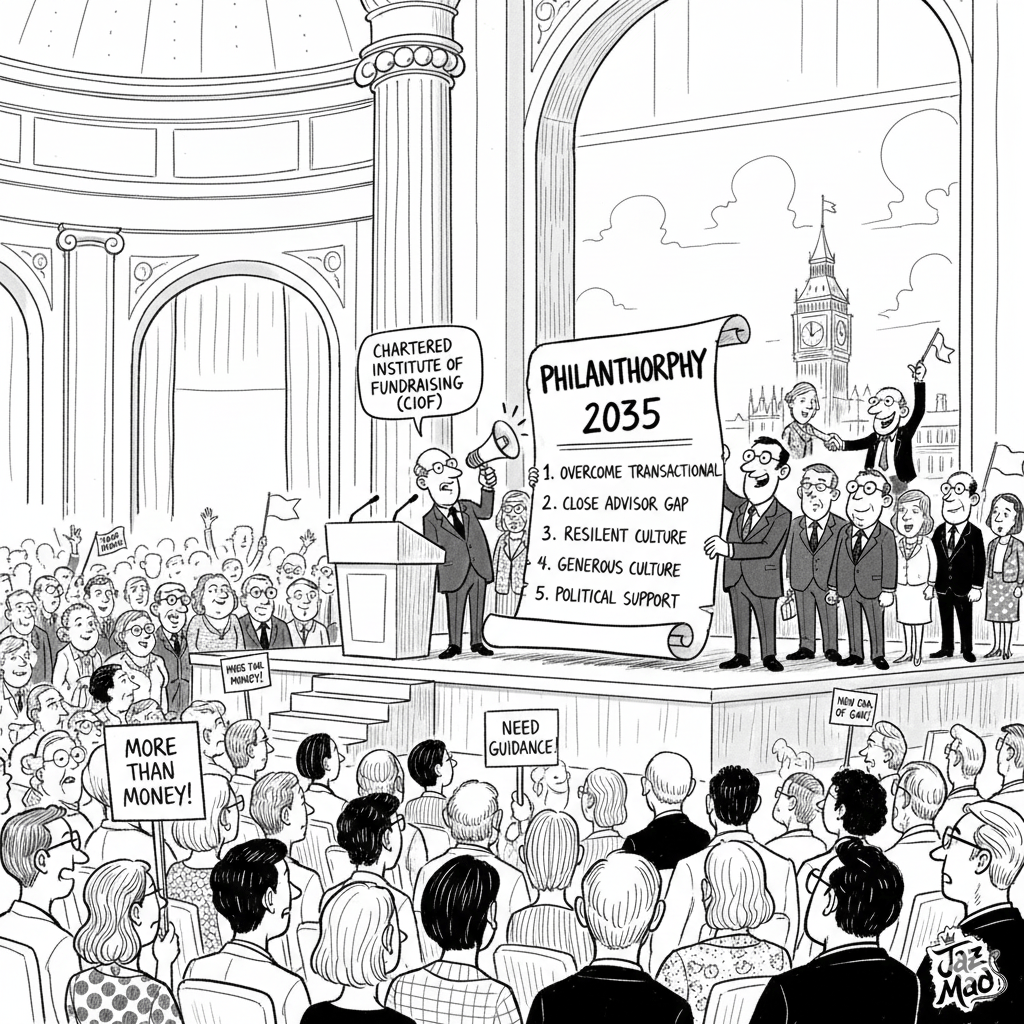
In response to these deep-seated cultural and professional blockades, the CIOF’s five-point plan offers a clear and strategic pathway to invigorate giving over the next 12 to 18 months. This targeted approach aims to dismantle barriers and foster a more vibrant, sustainable sector, inspiring confidence in the potential for meaningful change.
The bedrock of the plan is the call to secure political consensus. The CIOF argues that for philanthropy to flourish, it needs a stable and supportive policy environment, regardless of political cycles. As Claire Stanley, CIOF’s Director of Policy and Communications, notes, “The philanthropic market is complex… And, crucially, cross-party support to support our mission to grow philanthropy is key.” This effort aims to ensure government initiatives have the long-term momentum required for meaningful impact.
Building on this foundation, the plan launches a two-pronged assault on the sector’s cultural challenges. Internally, a newly created ‘Championing Fundraising Advisory Panel’ will be tasked with educating charity boards and senior leaders on the critical importance of investing in relationship-based fundraising. Externally, to counter the prevailing negative narrative, the CIOF will adopt an “always on” approach to promoting authentic, positive stories about the societal impact of generosity, aiming to reshape the national conversation.
Finally, the strategy provides the practical infrastructure needed to professionalise the sector’s approach. To close the advisor gap, the CIOF will work through its Major Donor Special Interest Group to build stronger bridges with professional advisors, developing shared resources to foster mutual understanding. Complementing this is the launch of a dedicated ‘Philanthropy 2035’ hub and policy tracker, a central repository of data, trends, and progress reports to keep fundraisers and charity leaders informed and equipped to adapt their strategies.
The initiative has received a positive reception from the government. Stephanie Peacock, Minister for Civil Society, welcomed the plan, stating, “This government recognises the important role major donors play in strengthening our charitable sector, and we will continue to work with organisations like the CIOF to create an environment where philanthropy can flourish.” While this governmental endorsement is welcome, the sector will be watching closely to see if these words translate into concrete policy support.
Charting a Course for a More Generous Future
Against a backdrop of unprecedented sector-wide pressure, the ‘Philanthropy 2035’ project emerges as a vital and proactive strategy to secure the future of major giving in the UK. It moves beyond reactive fundraising to architect a more sustainable and collaborative philanthropic environment. The initiative is not a static report but a living project, with the next phase involving member workshops scheduled for January and February 2026 to further shape its recommendations and ensure the voice of fundraisers remains at its core. To maintain transparency and accountability, the project will include regular progress reports and measurable milestones, allowing stakeholders to track developments and assess impact over time. Ultimately, the success of this decade-long vision will hinge on sustained collaboration—a determined partnership between charities, government, advisors, and philanthropists themselves. Only by working together can the sector hope to foster the nationwide culture of generosity that this ambitious blueprint rightly aspires to build.