The Integrated Excellence Blueprint: Prior’s Court and the Strategic Defiance of the UK SEND Crisis
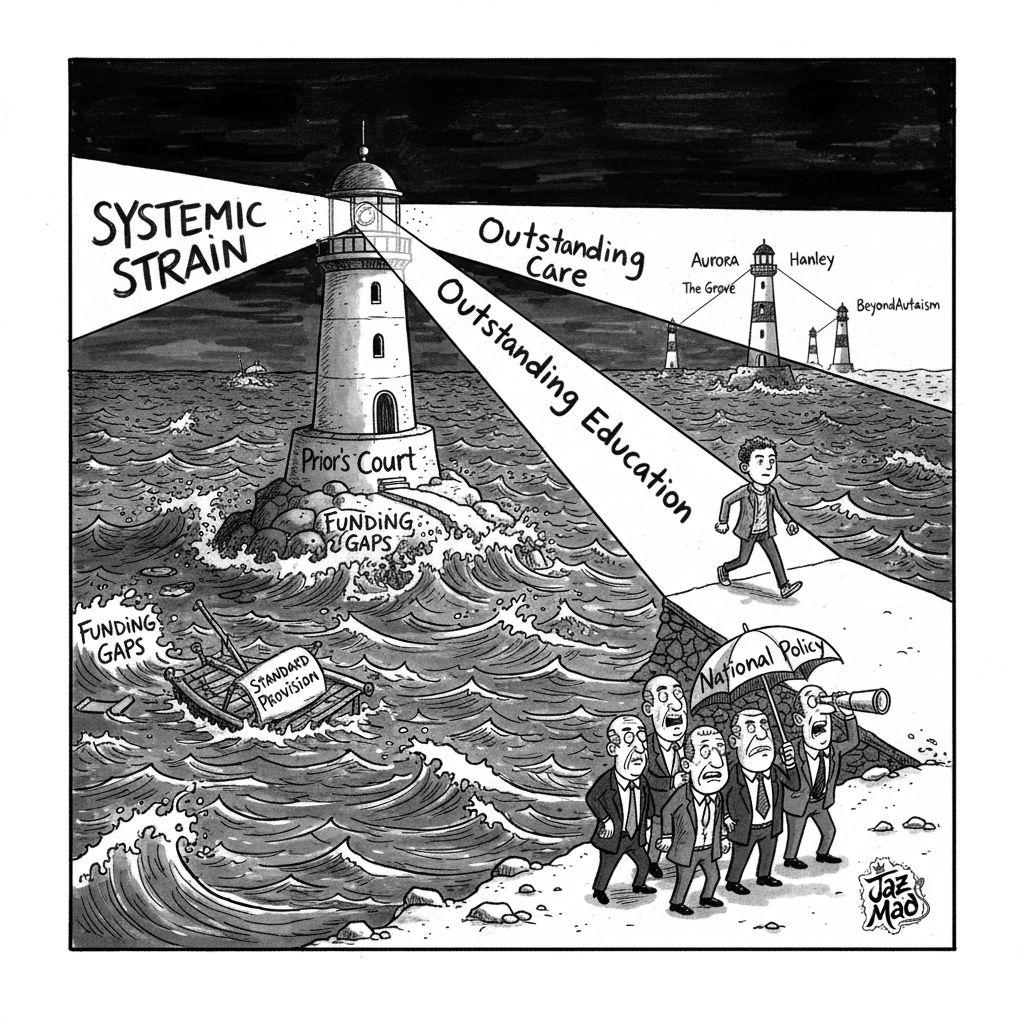
The UK’s Special Educational Needs and Disabilities (SEND) sector is currently navigating unprecedented systemic strain. With the Education Committee’s Solving the SEND Crisis report highlighting a national system under fire, the pressure on specialist providers to deliver high-quality outcomes has never been more intense. Against this turbulent backdrop, Berkshire-based autism charity Prior’s Court has achieved a regulatory milestone that serves as a definitive benchmark for the industry: a “Double Outstanding” status from Ofsted for both its care and education provisions.
This result, the first of its kind for the organisation since 2016, marks a return to the absolute highest tier of regulatory performance. In an environment where “compliance” is often the limit of survival, achieving dual “Outstanding” ratings is a critical indicator of organisational resilience. It signals more than just operational success; it represents a blueprint for integrated service delivery where education and residential care function as a single, seamless organism. For trustees and policymakers, the Prior’s Court trajectory suggests that even amidst a national crisis, exceptional standards are achievable through a relentless focus on synergy and continuous improvement.
Excellence in Integrated Care and Education
The architecture of success at Prior’s Court is built upon the synthesis of its residential and educational arms. In November 2025, Ofsted Care inspectors conducted a rigorous evaluation of the Children’s Home, which supports autistic young people aged 5 to 25 with complex needs. The resulting report, published in January 2026, awarded an “Outstanding” judgement, noting that children make “exceptional progress” because staff are “highly skilled, child-focussed, and dedicated.”
The inspection findings provided a granular look at what “Outstanding” care looks like in practice. Inspectors highlighted a “strong safeguarding culture” where staff act with immediacy and effectiveness, underpinned by an “excellent understanding of complex health needs.” Crucially, the report moved beyond clinical metrics to praise the “warmth and sensitivity” of staff interactions, noting that the team possesses a comprehensive, nuanced understanding of the children’s behaviours.
This Care rating serves as the second half of a unified “gold standard” for the charity. Earlier in 2025, Prior’s Court School secured its third consecutive “Outstanding” rating. Combined, these judgements validate the charity’s “journey of continuous improvement.” Lisa Pothecary, the Children’s Home Registered Manager, framed the findings as a “powerful testament” to staff knowledge, while Director of Care Natalie Boothroyd emphasised that the organisation is “never satisfied,” striving to push the quality of provision even further. This narrative of constant evolution indicates that Prior’s Court is not merely maintaining standards but is actively redefining the benchmark for specialist providers in the UK.
A Sector-Wide Trend: The Anatomy of Regulatory Outperformance
The success at Prior’s Court is not an isolated anomaly but part of a rising tide of specialist providers that are deliberately outperforming the systemic failings of the wider SEND landscape. These organisations maintain “Outstanding” status by adopting research-led methodologies and subjecting themselves to rigorous external peer review.
Aurora Hanley School in Bucknall recently secured its third consecutive “Outstanding” rating, with inspectors noting a “considerable emphasis on understanding each pupil.” By tailoring ambition to individual needs, the school has enabled pupils with previously disjointed schooling to flourish. Their curriculum, particularly the delivery of personal, social, health, and economic (PSHE) education, was described as being of “exceptional quality.” Principal Tracy Whitehurst’s “never satisfied” ethos mirrors the leadership culture at Prior’s Court, highlighting a sector-wide trend where the best providers aim to go “above and beyond” basic national standards.
Similarly, The Grove has cemented its position as a “centre of excellence,” securing an “Outstanding” rating in its first full inspection, conducted from 28th February to 1st March 2023. Beyond Ofsted, the school holds “Advanced Autism Accreditation,” a status reserved for provisions that demonstrate “exceptional” quality and consistency. Their model relies on “Challenge Partners,” a practitioner-led collaboration where reciprocal peer reviews, often led by Ofsted or HMI inspectors, drive a culture of constant scrutiny.
In the early years sub-sector, Autism Early Support (Circle Centre) achieved its fifth consecutive “Outstanding” rating in July 2025. Their success is rooted in “highly effective reflective practice” and the application of the SCERTS framework. This research-led methodology—focusing on Social Communication (SC), Emotional Regulation (ER), and Transactional Support (TS)—provides a child-centred model that integrates development into every aspect of a learner’s daily life. These examples suggest that the commonalities of high-performing organisations include a commitment to being research-driven and an openness to external, practitioner-led evaluation.
The Road to Excellence: BeyondAutism and the Improvement Blueprint
While some organisations work to maintain their status, others provide a masterclass in strategic development by navigating the transition from “Good” to “Outstanding.” BeyondAutism’s Tram House School in Wandsworth provides the sector with a clear blueprint for this trajectory. Following a “Good” rating in 2022, the school underwent a strategic pivot and reached the top rating across all categories by July 2025.
To achieve this, Tram House implemented four key pillars of improvement that now serve as a model for other sector leaders:
- Personalised Curriculum: Re-engineering the educational offer to meet unique individual needs with greater precision.
- Independence and Employability: Strengthening travel training and work experience to ensure pupils are prepared for adulthood—a key recommendation of the Education Committee.
- Professional Development: Investing heavily in staff training to ensure expertise remains sector-leading.
- Family Partnerships: Building deep, collaborative connections to ensure learning continues beyond the school gates.
BeyondAutism CEO Tracie Coultas-Pitman has framed this achievement as a direct response to the national “SEND crisis.” By translating national recommendations into local practice, Tram House demonstrates that “inclusive autism education” must shift the focus from simple compliance to empowering lives full of choice and opportunity.
Operational Foundations: Leadership, Research, and Community Trust
Analysis of Ofsted’s findings across the highest-performing residential special schools reveals the internal structures necessary to sustain these standards. Leadership is the primary driver; in “Outstanding” schools, leaders are not detached administrators. They are deeply involved in daily shifts, treating residential care as an “integrated part of the school” rather than an optional add-on.
Moreover, these organisations are increasingly “child-centred” in ways that go beyond traditional care. Ofsted has noted “Outstanding” settings where children are involved in high-level decisions, such as designing a school uniform made from specific fabrics to accommodate sensory needs. This level of granular, evidence-based practice extends to research on sleep patterns and restrictive diets, which directly improve children’s health and learning ability.
This operational dedication is what fuels the community trust seen at Prior’s Court. The synergy between staff and families is personified by Mark Mederson, the Head of Care with 12 years of tenure, and Brandon Milburn, whose brother has spent four years at the charity and recently transitioned to the Young Adult Provision for those aged 19 to 25. Both are running the 2026 London Marathon to raise funds. Brandon’s motivation—to help the charity “expand its amazing provision” so other families can thrive—illustrates the deep trust that is only earned when an organisation consistently delivers “Outstanding” results for the most complex needs.
Conclusion: The Future of Autism Provision
The “Double Outstanding” status of Prior’s Court, alongside the consistent successes of Aurora Hanley, The Grove, and BeyondAutism, signals a maturation of the UK autism sector. These organisations are no longer just service providers; they are setting the pace for policymakers by demonstrating that high expectations and accountability can lead to exceptional outcomes, even within a broken national system.
Looking ahead, the standard for survival and growth in the sector will be defined by the total integration of care and education, backed by measurable social impact. The publication of BeyondAutism’s 2024/25 Impact Report—which tracks progress across five strategic areas, including reducing school placement breakdown and increasing family resilience—points to a future where “Impact Reports” are as essential as Ofsted ratings. For trustees and policymakers, the message is clear: the future of the sector belongs to those who combine research-led practice with a “never satisfied” approach to organisational improvement. As the SEND crisis continues, these “Outstanding” leaders remain the essential architects of a world where every autistic learner can belong and succeed.