The Prize and the Price: Why a TV Windfall Can’t Fix Social Care’s Systemic Crisis
A Tale of Two Realities
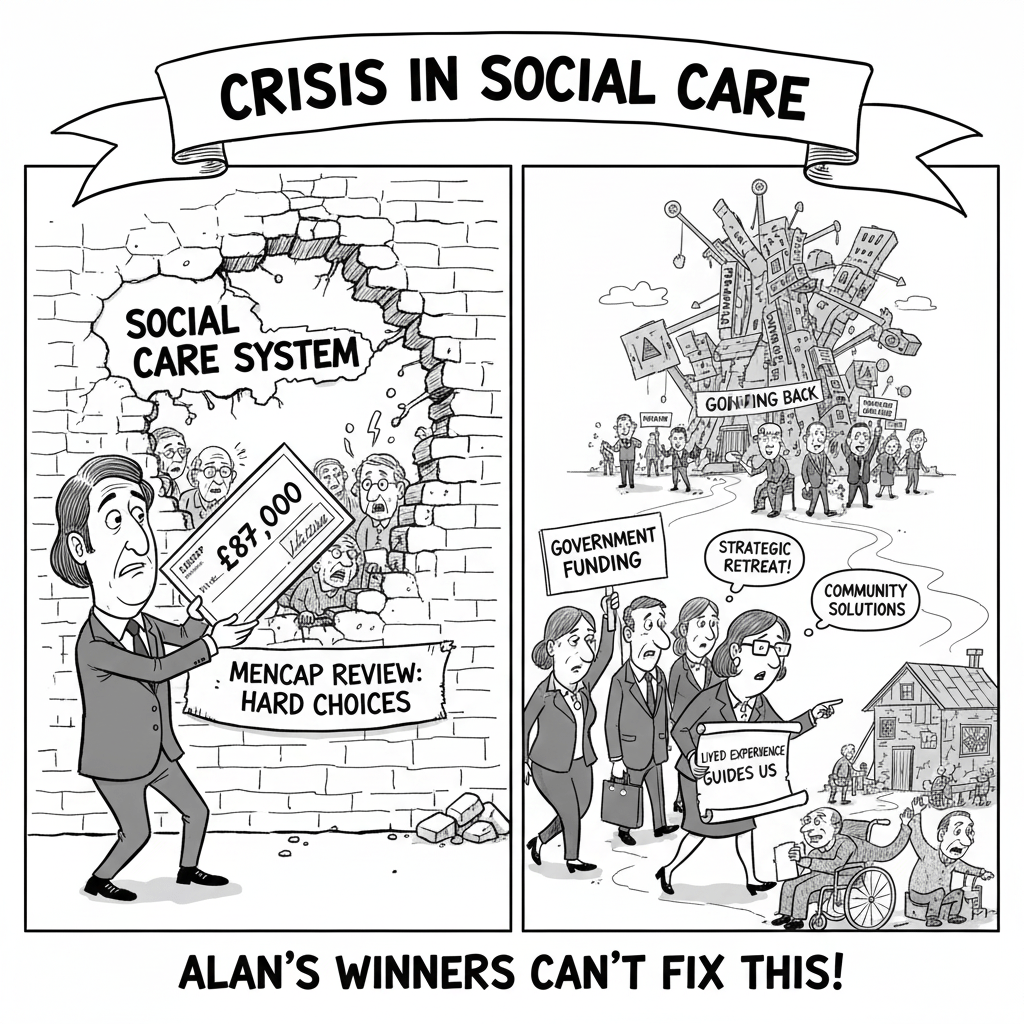
When comedian Alan Carr secured an £87,500 prize pot for Neuroblastoma UK in the finale of Celebrity Traitors, it provided a welcome dose of good news—a high-profile, emotionally charged fundraising success that rightly captured headlines. Yet, this celebratory moment stands in stark contrast to the daily, gruelling reality confronting the UK’s largest service-providing charities. Behind the heartwarming windfalls lies a landscape of systemic underfunding and operational strain. The Royal Mencap Society’s 2023-2024 annual review serves as a transparent case study of this divergence. It reveals an organisation navigating the maelstrom of the social care crisis, forced to make deeply difficult strategic choices to secure its long-term future. For charity leaders and trustees, Mencap’s journey offers a sobering but essential blueprint for survival, proving that the courage to make painful strategic retreats is now as critical as any fundraising triumph.
The Core Challenge: Navigating the Social Care Maelstrom
For any charity leader or trustee, understanding the immense external pressures shaping the operational environment is a strategic imperative. Mencap’s latest annual review provides a masterclass in this analysis, detailing a year defined by the dual impact of the cost-of-living crisis and what its Chair, Dame Carolyn Fairbairn, terms the ‘crisis of underfunding’ in the social care sector. This combination created a perfect storm, hitting people with a learning disability especially hard while simultaneously eroding the financial viability of the services they rely on, which can ultimately affect service quality and client outcomes.
As one of the UK’s largest social care providers, working with 96 different local authorities, Mencap found itself at the sharp end of this crisis. The organisation’s review describes a “very challenging operating environment” created by rising costs, worker shortages, and underfunded local authorities. This pressure, compounded by wider sector challenges such as 152,000 vacancies in social care, forced the organisation to make what Dame Carolyn describes as “hard choices” to ensure its financial sustainability.
Most notably, this involved the strategic decision to hand back care contracts that were costing the charity more to run than the funding it received from local authorities. This is a move fraught with human consequences, a fact Dame Carolyn openly acknowledges:
“I am deeply aware of the impact this has had on the people we support, their families and our colleagues, and we have done all we possibly can to minimise disruption to everyone concerned.”
This single decision encapsulates the profound dilemma facing major service providers: how to balance the immediate needs of individuals against the long-term imperative to remain a going concern. It illustrates that for charities of this scale, survival is not just about fundraising, but about meticulous financial management and strategic retreat when necessary. Mencap’s experience shows that in the face of systemic underfunding, even the largest players must re-evaluate their commitments to protect their core mission, setting the stage for a period of radical internal review and recovery.
A Blueprint for Resilience: Difficult Decisions and Financial Stability
In response to these sector-wide pressures, a clear trend is emerging: major charities are undertaking significant strategic reviews to secure their future, often involving painful but necessary decisions. Mencap’s journey offers a viable model for navigating this process. The charity’s annual review details the implementation of a ‘Financial Recovery Plan,’ a series of projects that underpinned a significant turnaround. The success of this plan was profound, enabling the organisation to report that it was ‘ending the year in a stable and sustainable financial position,’ demonstrating measurable progress in resilience.
Mencap is not alone in this strategic realignment. The debt charity StepChange, in its 2024 Annual Report, reveals a similar story of proactive restructuring. Faced with a challenging market, its new five-year strategy has also required “difficult choices,” including the closure of its equity release subsidiary. This move, much like Mencap’s decision to hand back unviable contracts, demonstrates a sector-wide shift towards focusing resources on core areas of impact where charities can deliver the most effective and sustainable support. It is a clear signal that survival and future growth depend on a willingness to prune operations that are no longer viable.
The human element of such a recovery cannot be overlooked. Reflecting on a year of significant change, Mencap’s acting CEO, Jackie O’Sullivan, praised the organisation’s internal strength and cohesion. Her reflection offers a key lesson for any leader steering a charity through turbulent times:
“I’m proud of how we’ve pulled together, and our efforts are showing a positive impact. The big lesson is that together we are stronger.”
This emphasis on collective effort underscores that while financial plans and strategic reviews are essential, a resilient culture is the engine that drives their success. It is the governance and values that guide these decisions that ensure they are made not just for financial stability, but also in true alignment with the organisation’s core mission. Recognising this shared purpose can inspire sector professionals and stakeholders to work together towards common goals, fostering a sense of confidence in the sector’s resilience.
Guided by Lived Experience: The Centrality of the Voices Council
When making difficult decisions that directly affect service users, the principle of co-production moves from a ‘nice-to-have’ to a strategic necessity. Authentic involvement of people with lived experience is critical for ensuring that even the toughest choices are made with compassion and integrity. Mencap’s governance structure provides a powerful example of this principle in action through its Voices Council, which the annual review describes as being ‘made up of people with a learning disability who advise and guide our priorities and decisions.’ Recognising the value of lived experience can evoke empathy among social care sector professionals and stakeholders, reinforcing the ethical importance of inclusive decision-making.
The council’s influence is not tokenistic; it is embedded at the highest levels of the organisation. Jackie O’Sullivan described its input to the executive team and the board as ‘invaluable,’ particularly in shaping the ‘reset plan.’ Her testimony reveals the council’s crucial role in navigating the difficult process of handing back services, ensuring that these decisions align with our values and minimise negative impacts.’ This model of co-production not only enhances ethical governance but also ensures that decisions are informed by lived experience, which is vital for maintaining trust and integrity in the sector.
This model of being “led by people with a learning disability” is a source of immense pride for the organisation, reinforced by the presence of two trustees with a learning disability on the main board. The Voices Council ensures that the perspectives of those Mencap exists to serve are not just heard but are central to its direction, providing a crucial ethical compass during a period of intense financial and operational pressure. This commitment to lived experience is fundamental, grounding the charity’s strategic recovery in the very community it supports and enabling it to maintain focus on its ultimate purpose.
The Wider Fight: Campaigning Beyond the Balance Sheet
Despite an intense inward focus on financial recovery and organisational stability, Mencap has successfully maintained a powerful external campaigning presence. This dual focus—stabilising the ship while simultaneously fighting the storm—is a hallmark of a mature and strategic third-sector leader. The charity’s annual review demonstrates a clear understanding that delivering services and advocating for systemic change are two sides of the same coin.
Mencap’s campaigning priorities are directly informed by the stark realities faced by people with a learning disability, starting with profound health inequalities evidenced by a shocking life expectancy gap where females die 23 years younger and males 20 years younger than the general population. This issue was the focus of a major Health Inequalities Summit attended by the charity’s Royal Patron, The Duchess of Edinburgh. The charity also makes employment a top priority, confronting the shocking statistic that only 4.8% of adults with a learning disability known to their local authority are in paid work, even though 86% want a job. This is all underpinned by a continued push for systemic social care reform through its ‘Why We Care’ campaign, which calls for an immediate cash injection into the system and better pay for vital social care staff.
This persistent advocacy work sets the stage for the arrival of new chief executive, Jon Sparkes, in June 2024. Dame Carolyn Fairbairn expressed her confidence that his “experience and passion will enable us to further advance our vision.” His leadership will be crucial to continuing this fight, ensuring that the hard-won financial stability serves as a platform for even greater impact.
A Sector at a Crossroads
The celebratory headlines generated by fundraising wins like Alan Carr’s offer a deceptively simple narrative of charitable success. While hugely significant for the recipient charities, they mask the far more complex and arduous reality faced by organisations operating at the coalface of public service delivery. The journey detailed in Mencap’s annual review—marked by painful choices, strategic restructuring, and a deep-seated commitment to its values—provides a sobering but essential blueprint for survival in the chronically underfunded social care sector. It proves that resilience is not just about weathering the storm but about having the courage to change course to navigate it. As the sector looks ahead, the key question is not whether charities can secure a windfall, but whether they can master the difficult art of strategic realignment. The success of new leadership at major providers like Mencap and the outcome of the relentless battle for sustainable government funding will determine whether the sector is heading for recovery or a managed decline.