The Great Disconnect: Why the Charity Sector’s AI Boom is Fuelling Anxiety in its Finance Teams
The AI Paradox in the Charity Sector
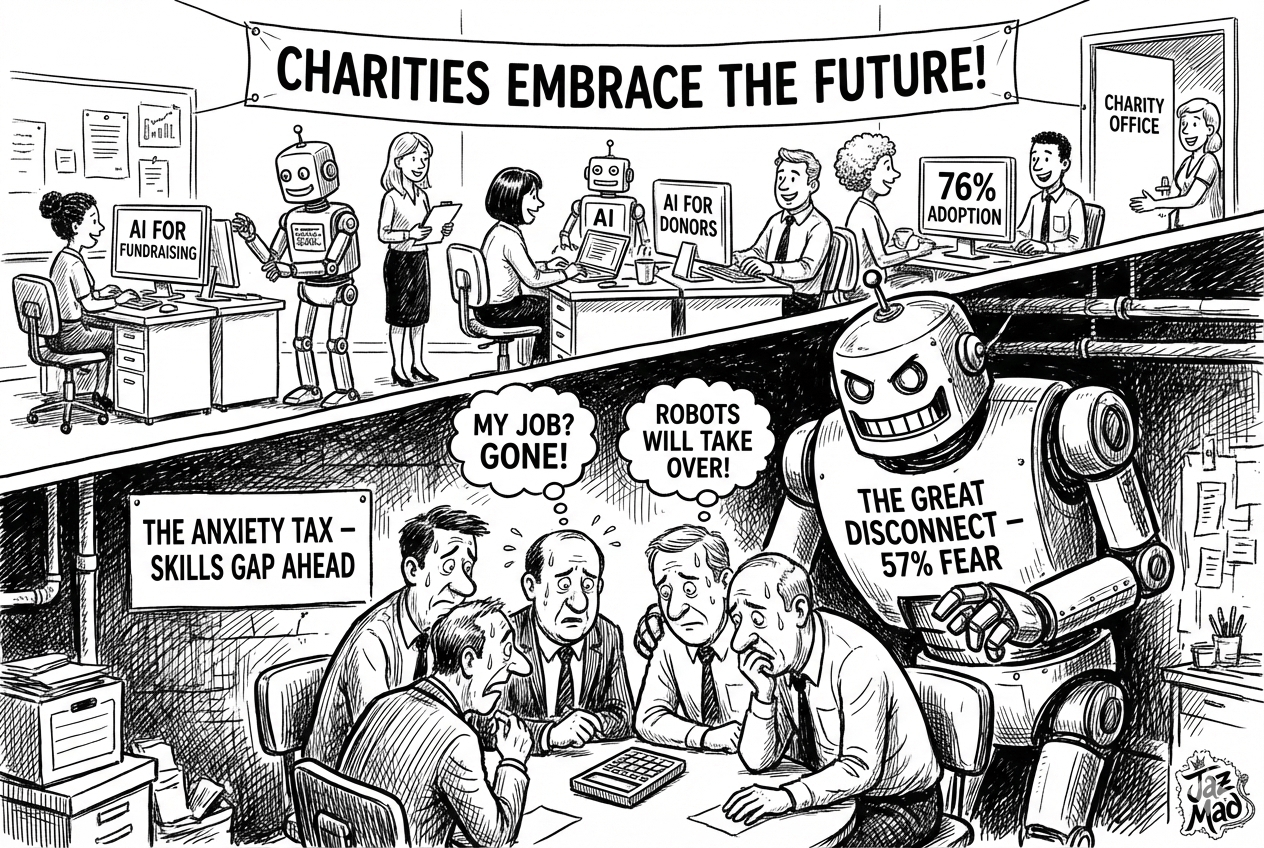
The pace of technological change in the third sector has reached a tipping point. According to the Charity Digital Skills Report 2025, a remarkable 76% of charities are now using Artificial Intelligence, a substantial increase from 61% just one year prior. This rapid acceleration signals a sector-wide push for efficiency and impact in an increasingly challenging operational climate. Yet, this headline-grabbing trend conceals a more complex and troubling story. New research reveals a hidden layer of anxiety and concern brewing specifically within charity finance teams, the very professionals tasked with ensuring the sector’s stability and sustainability. This disconnect between rapid technological adoption and workforce readiness is not merely an HR issue; it is a strategic vulnerability that leaders and trustees must understand and navigate. A closer examination of the data reveals the specific nature of these anxieties and why they are so pronounced in the non-profit world.
The Core Story: Analysing the Data on Finance Professionals’ AI Fears
The sector-wide adoption figures mask a serious vulnerability. New data from a survey by iplicit reveals that the professionals responsible for financial stewardship are the most apprehensive about the AI transition, harbouring anxieties that significantly outpace those in other sectors.
The research, published in Charity Today News, shows that 57% of finance leaders in the charity and non-profit sectors believe AI could become a threat to senior roles, including their own. This figure is significantly higher than the 41% reported by their counterparts in the tech sector, underscoring the heightened level of concern within the third sector. This anxiety is not limited to senior positions; across all sectors surveyed, 51% of finance leaders see a threat to entry-level jobs. This apprehension may be linked to the pace of implementation, with full AI adoption in the charity sector (27%) lagging behind the tech industry (48%).
The data also details the specific personal and professional worries weighing on these professionals. The top three concerns are the need to learn new skills quickly (36%), the potential impact on professional reputation if AI makes mistakes (34%), and deep uncertainty about how AI will reshape their career paths (32%).
Crucially, the survey uncovers a profound ethical dimension unique to the sector. Over a quarter (27%) of charity finance leaders cite ethical concerns about adopting AI, a rate 2.5 times higher than in the tech sector (11%). This highlights a deep-seated apprehension about aligning automated systems with the core values and mission-driven purpose of their organisations. These statistics are not just numbers; they are clear signals of a profession in flux, prompting a fundamental re-evaluation of the skills and roles required for the future. Addressing these ethical concerns is essential for fostering trust and responsible AI integration in the sector.
Impact and Implications: A Profession in Transformation
This widespread anxiety is a direct response to a fundamental reshaping of the finance profession, in which the demand for technological proficiency is rapidly eclipsing traditional skills, creating immense pressure on individuals to adapt.
The skills profile for the future finance professional is shifting dramatically. According to the implicit survey, proficiency with AI and automation tools (41%) is now viewed as the most critical skill for new hires. This is followed closely by cybersecurity and data governance (39%) and data analysis (34%). Traditional accounting skills, by contrast, were flagged as a top priority by only 14% of respondents.
This rapid pivot is creating what psychologists are terming ‘AI-Induced Anxiety’ and ‘Automation Stress’. This is not just abstract pressure; it carries a tangible and devastating human cost. Analysis of this phenomenon suggests that the career stagnation and mental health crises resulting from this anxiety can impose a lifetime financial burden—an “Anxiety Tax”—of over £3.0 million on a mid-career professional. This transforms the issue from a workforce wellbeing concern into a direct threat to the financial security of the sector’s talent pool.
This problem is compounded by a significant leadership skills gap. The Charity Digital Skills Report reveals that over a third of respondents (36%) believe their CEO has “poor AI skills,” while an even more concerning 4 in 10 (44%) state the same of their board of trustees. This vacuum of senior-level expertise directly fuels the ethical and professional anxieties felt by finance teams, leaving them to navigate the complexities of AI adoption without a clear vision or adequate support.
Sector Voices: Navigating Threats and Opportunities
Beyond the statistics, commentary from sector leaders provides crucial context and strategic advice, emphasising that navigating AI challenges is a collective effort. Framing these challenges as opportunities for shared growth can inspire a sense of unity and purpose among stakeholders, encouraging proactive engagement with human-centric adaptation.
The Charity Finance Group offers a core strategic principle: AI should be used to “replace tasks, not roles.” This reinforces a narrative of evolution over obsolescence. Ian McLintock of Charity Excellence supports this view, comparing the advent of AI to the introduction of Excel. He argues that the technology will ultimately take “a lot of the burdensome admin out of finance roles and free people up to contribute in a much more valuable way.”
However, this transformation introduces a new competitive dynamic. McLintock offers a stark warning for those who resist change: “AI won’t necessarily take your job, but others using it may end up overtaking you.”
This pressure is also creating new opportunities. The implicit survey found that 65% of non-profits are creating new finance positions as a direct result of AI. McLintock points to emerging roles such as ‘AI ethicists,’ demonstrating the sector’s proactive approach to managing risks and building resilience amid change.
The Wider Context: Pressures and Priorities in a Perfect Storm
The charity sector’s engagement with AI is not happening in a vacuum. It is being shaped by a convergence of intense external pressures and persistent internal constraints, forcing organisations to seek technological solutions to survive and improve efficiency.
Janine Duggan, Head of Digital at Guide Dogs, describes the current environment as a “perfect storm” defined by rising demand for services, shrinking resources, and a more challenging fundraising climate. In this context, AI adoption is not a luxury but a strategic necessity, offering a potential lifeline for organisations struggling to do more with less.
However, the ambition to innovate is colliding with significant and long-standing barriers. The Charity Digital Skills Report 2025 identifies the primary obstacles to digital progress as:
- Squeezed organisational finances (69%)
- Finding funds for infrastructure and tools (64%)
- Lack of headspace and capacity (63%)
Zoe Amar, founder of the report, underscores the critical role of funding in this equation, stating that “squeezed organisational finances are the biggest barrier that 69% of charities now face. This ‘perfect storm’ of high pressure and low resources creates a problematic environment for the kind of strategic, people-focused AI transition the sector desperately needs.
A Call for a Just and Strategic Transition
The central paradox is apparent: the charity sector is adopting AI at an unprecedented rate out of necessity, yet its finance professionals harbour deep-seated and valid concerns about job security, skills gaps, and ethical issues that outpace those in other industries. This is not a sign of resistance to progress but a rational response to rapid transformation in a high-pressure, under-resourced environment. The path forward is not to slow adoption, but to manage the transition with a strategic, human-centred approach.
As the data and experts suggest, this requires a concerted effort. Funders must recognise the need to back core skills and staff time for digital upskilling, not just shiny new tools. Leaders and trustees must prioritise their own AI literacy to provide clear, confident guidance. And organisations must develop robust ethical frameworks to ensure technology serves their mission without compromising their values.
Ultimately, the sector’s challenge is to harness the immense power of AI while ensuring its people are supported, reskilled, and empowered—not left behind. As Rohati Chapman of Carers Trust powerfully argues, the future may be digital, but for the charity sector, this transition “must also be just.”