Charities Plead for Budget Lifeline Amid Unprecedented Financial Crisis
A Sector on the Brink
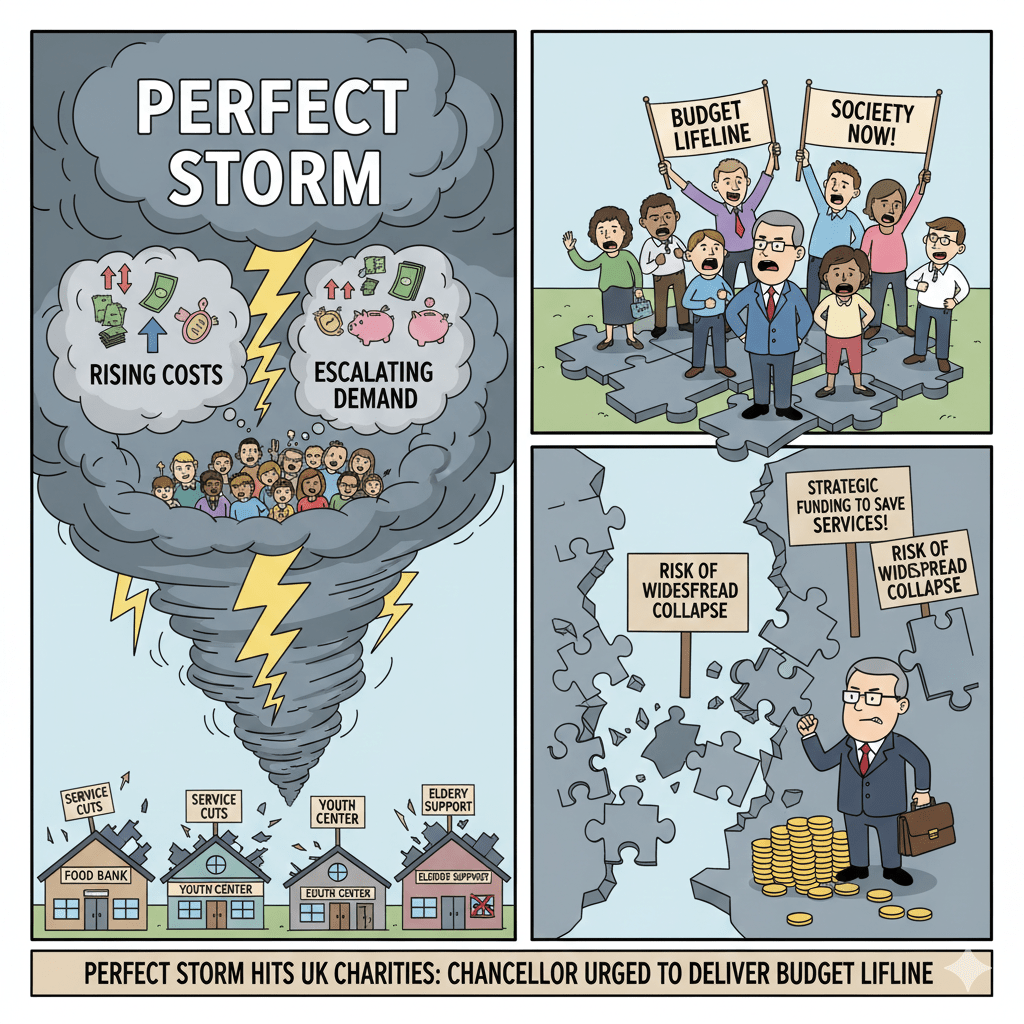
The UK’s voluntary sector is facing a perfect storm. A toxic combination of soaring operational costs, falling income, and unprecedented demand for services has pushed thousands of organisations to the brink of collapse. In response, the Civil Society Group, a coalition representing over 80 infrastructure and membership bodies, has delivered a comprehensive and urgent submission to the Chancellor ahead of the Autumn Budget. This is not merely a request for support; it is a unified plea for a strategic partnership to prevent the widespread failure of essential community services. The upcoming budget is therefore a critical moment, one that will determine the survival of the social fabric that supports vulnerable people across the UK.
Analysing the Sector’s Financial Crisis
A confluence of severe economic pressures has created an unprecedented financial crisis for charities, making the government’s upcoming fiscal decisions more critical than ever. This is not a crisis born of a single issue, but what one respondent to the VCSE Barometer survey described as a “‘death by a thousand cuts’ situation”. It is the cumulative, relentless impact of multiple pressures that is proving fatal, rendering piecemeal government solutions insufficient. This systemic challenge requires a systemic response from the Chancellor.
Escalating Operational Costs: Charities are struggling with a triple whammy of rising costs. The increase in Employer National Insurance Contributions (ERNICs) has been a significant blow, with a recent Charity Finance Group (CFG) survey revealing that almost half of charities view it as having a “major impact”. This is compounded by persistently high inflation and the need to increase the National Living Wage, creating immense, unsustainable financial pressure.
The Real-World Consequences for Services and Staff
The abstract financial pressures detailed above are forcing charities to make increasingly difficult decisions that translate into tangible, damaging outcomes for communities across the country. These choices are not made lightly, but they are becoming unavoidable as organisations fight for survival.
Erosion of Essential Services: Charities are being forced to scale back their operations, leaving vulnerable people without support. The CFG survey found that over one-fifth of charities have already had to reduce or close services. The situation is particularly acute for those delivering public services on behalf of the state. NCVO research cited in the Civil Society Group’s submission reveals a stark reality: 72% of organisations have either withdrawn from public service delivery or are actively considering doing so because the contracts are financially unsustainable. This represents a catastrophic loss of specialist expertise and trusted providers for communities.
A Workforce Under Strain The crisis is also exacting a heavy human toll on the sector’s workforce. Over a third of charities have made staff redundant in the past year, and half have not filled vacant positions, according to the CFG survey. To plug the gaps, organisations are becoming more reliant on unpaid help, with the VCSE Barometer finding that over two-thirds (68%) expect to increase their reliance on volunteers. This places an unsustainable burden on volunteers and undermines the stability and professionalism of the sector’s workforce.
This operational strain is a direct result of profound financial instability. Six in 10 charities are now running deficits, with the survey revealing that for half of those, this is at least the second year running they have been unable to balance their books. Furthermore, the VCSE Barometer reveals that a deeply concerning 69% of organisations across the UK are now relying on their financial reserves simply to sustain day-to-day operations. These reserves, intended for investment and unforeseen emergencies, are now being drained just to keep the lights on, a strategy that is patently unsustainable.
While the financial pressures are severe, the sector’s unified response demonstrates resilience and a shared commitment to overcoming these challenges together.
The Sector’s Unified Appeal
The Civil Society Group’s budget submission offers a strategic opportunity to build a stronger, more sustainable partnership between government and the voluntary sector, fostering optimism for meaningful reform.
The core policy recommendations are strategically grouped to address the crisis from multiple angles:
Sustainable Funding and True Partnership: At the heart of the appeal is a call for sufficient, multi-year funding settlements for local government and for all public service grants and contracts to be funded to cover the “true cost” of delivery. This targets the root cause of financial instability, shifting the relationship from a transactional ‘race to the bottom’ on price to a long-term partnership focused on delivering community outcomes.
These measures represent a clear and achievable plan to move the sector from crisis to resilience, but their implementation depends entirely on the political will demonstrated in the upcoming budget.
A Crossroads for the UK’s Social Fabric
The UK’s voluntary sector is at a critical crossroads. Its resilience, tested repeatedly by the pandemic and the cost-of-living crisis, is now stretched to its breaking point. Charities are no longer just managing pressures; they are making impossible choices between cutting essential services, losing skilled staff, or facing closure. The Civil Society Group’s budget submission provides the Chancellor with a clear and practical path forward—a blueprint for stabilising the sector and building a more effective partnership that benefits communities nationwide. The Autumn Budget is therefore more than a fiscal statement; it is a decisive test of the government’s commitment to its own Civil Society Covenant and to the future of the organisations that form the very backbone of our communities.