Health Lottery’s £300,000 Christmas Lifeline: A Targeted Boost for Frontline Charities Amidst Deepening Need
As a challenging winter deepens across the UK, The Health Lottery Foundation has announced a £300,000 funding injection for four national charities, providing a critical pre-Christmas boost to frontline services. This significant grant arrives at a time of acute need, where, as one charity leader starkly notes, many people are forced to “choose between heating their home or eating.” For those facing food poverty, homelessness, and childhood illness, this funding offers hope and reassurance, emphasising the real difference support can make during tough times.
The Core Story: Dissecting the £300,000 Grant
To fully appreciate the significance of this funding, it is essential to look beyond the headline figure and examine the specifics of the grant. Understanding precisely who benefits and how the funds will be deployed reveals the direct and practical impact that society lottery funding has on the delivery of frontline services. This detailed breakdown illuminates the strategic thinking behind the awards and the tangible outcomes they are designed to achieve for thousands of vulnerable people across Great Britain.
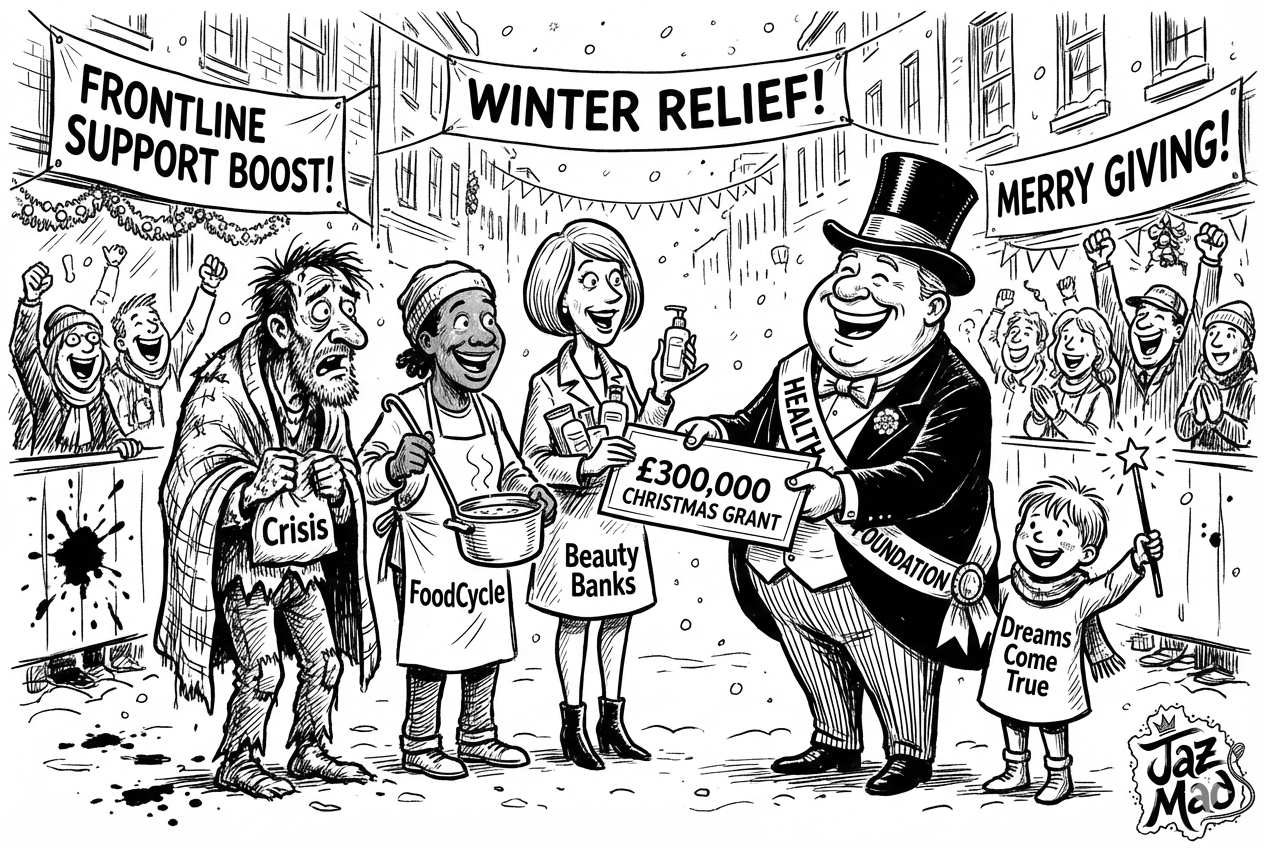
Thanks to its players, The Health Lottery Foundation has awarded a total of £300,000, split equally into grants of £75,000 for four carefully selected national charities: FoodCycle, Beauty Banks, Crisis, and Dreams Come True. Each grant is tailored to address specific operational needs and seasonal pressures, demonstrating a collective effort to make an immediate and meaningful difference in communities across Great Britain.
For FoodCycle, the grant will enable the delivery of approximately 620 community meal sessions, serving over 21,000 three-course meals to combat food poverty and social isolation. Crucially, this includes provisions for over 80 special Christmas meals, during which volunteers will provide festive extras such as decorations and crackers. The funding addresses a desperate need, as CEO Sophie Tebbetts explains: “Winter is a particularly difficult time for many of the people we support, with some telling us that at this time of year they often have to choose between heating their home or eating.”
The grant has been described as “transformational” for Beauty Banks, a grassroots charity providing hygiene essentials to those living in poverty. Co-Founder Jo Jones confirmed that the funding will be allocated to supply approximately 210 partner charities—including food banks, homeless shelters, and care leaver groups—with products such as soap, toothpaste, and deodorant. A portion of the grant also supports a Christmas Gifting Fund, enabling the distribution of 4,000 gifts to families experiencing hygiene poverty, providing a sense of dignity and care during the festive season.
Homelessness charity Crisis will use its funding to provide hotel rooms for 378 people sleeping rough in London and to support 5,500 people nationwide through its frontline services. Central to this initiative is a new, 41-bed women-only hotel in East London. This specialist service is grounded in a psychologically informed approach, offering private en-suite rooms, casework support, and a focus on “dignity, choice, and respect.” As Ian Richards, Head of Crisis at Christmas, explained, the funding will help people “begin a life beyond homelessness.”
Dreams Come True will direct its £75,000 to support 1,560 children with disabilities or serious illnesses in the UK’s most deprived areas. The funds will deliver a mix of large-scale community projects—such as adapted trikes in Merseyside and sensory areas in Glasgow and Inverclyde—and ten individual dreams, including bedroom makeovers and holidays. The gravity of the situation was underscored by CEO Lisa King, who noted that with 4.3 million children in the UK living in poverty, the need has “never been greater.”
This targeted allocation of funds demonstrates a clear strategy to bolster essential services at a time of peak demand, providing a crucial bridge between the specific grant details and the wider social context in which they operate.
Impact and Implications: Funding in the Face of a National Crisis
Moving beyond the grant’s mechanics, an analysis of its wider impact reveals how this funding portfolio directly addresses the most acute symptoms of a UK-wide social crisis. The selection of these four pillars—food, hygiene, shelter, and childhood illness exacerbated by poverty—represents a comprehensive strategic response to health and well-being inequality, particularly heightened during the festive period.
The work of FoodCycle and Beauty Banks aligns directly with the pressures families face as they struggle to make Christmas memorable amid rising living costs. The support for Beauty Banks to supply “care leaver groups” is particularly poignant. As one care leaver, Claire, told The Big Issue in a recent article covering a Coram survey, the festive period can be an exceptionally difficult time. “If you’re a lone care leaver living by yourself, with no family to be able to connect with over the Christmas holidays, it’s incredibly lonely,” she said. Receiving practical items and gifts can therefore serve as a potent reminder that they are not forgotten. Similarly, the work of Crisis, especially its new women-only service, provides a critical safety net during what its team calls “one of the hardest times of the year.”
This targeted approach reflects the funder’s strategic intent. Martin Ellice, Managing Director of The Health Lottery, affirmed this perspective, stating, “We’re grateful to everyone who plays The Health Lottery. Their play means we can step in at a time that’s especially hard for many people.” This focus on addressing immediate, pressing needs demonstrates the funding model’s agility, which enables such interventions.
Understanding The Health Lottery’s evolving funding model reveals its strategic shift towards targeted social impact, shaping future health and well-being support across Great Britain.
For charity professionals and sector analysts, understanding the operational model behind The Health Lottery—and the significant structural changes it has recently undergone—is critical. This background provides essential context for comprehending the future landscape of what has become a substantial and agile funding stream for health and well-being causes across Great Britain.
The Health Lottery is not a single national lottery but a collection of society lotteries, with 20p of every £1 ticket going directly to health-related causes. Since its launch in 2011, it has raised over £136 million. For over a decade, these funds were primarily distributed through a long-standing partnership with People’s Health Trust.
However, a major strategic shift occurred at the beginning of this year. According to the Trust’s annual report, the partnership formally ended in January 2024. In its place, The Health Lottery Foundation was established in January 2024 to ensure the money raised by players “flows back into local communities and makes a difference where it’s most needed.” This £300,000 Christmas grant is therefore not just a donation, but a statement of intent and a practical demonstration of the Foundation’s new operational model. It represents the first clear evidence for the sector of how the Foundation will behave as a direct grant-maker, making its specifics highly significant.
A Future Outlook for a Key Sector Funder
This £300,000 grant is far more than a seasonal donation; it is a clear and powerful indicator of The Health Lottery Foundation’s new strategic direction. It signals a definitive shift into its role as a direct funder, reinforcing a continued commitment to supporting grassroots charities that tackle the root causes of health inequality in the UK. The targeted nature of these awards—addressing homelessness, poverty, and critical illness at a time of peak need—highlights an agile, responsive funding philosophy. For the wider charity sector, this transition poses a crucial question for fundraisers and charity leaders: does this targeted, rapid-response funding signal a move away from the previous model’s broader community-led programmes, and how should organisations now position themselves to attract support in this new era of direct funding from The Health Lottery Foundation?