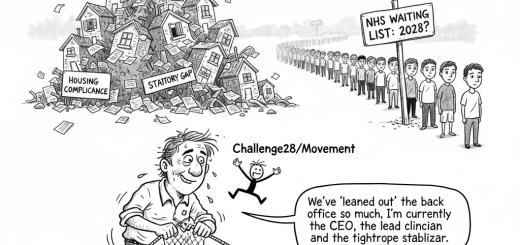
Housing and Charity Regulators Forge Formal Alliance to Close Oversight ‘Gap’
Bridging the Regulatory Divide

In a landmark move for the UK charity sector, the Regulator of Social Housing (RSH) and the Charity Commission have formalised their working relationship through a new Memorandum of Understanding (MoU), published on 11 November 2025. This development marks a significant step towards closing a long-discussed ‘regulatory gap’ affecting thousands of housing providers operating as charities. For years, many of these bodies, classified as ‘exempt charities’, have effectively operated without a primary regulator for matters of charity law, a situation that has been a source of long-standing ambiguity and concern. The new agreement establishes a clear framework for collaboration, signalling a more unified approach to oversight for a vital part of the social housing landscape.
The new Memorandum of Understanding is designed to create a “collaborative, efficient and effective working relationship” between the two powerful regulators. At its heart, the agreement commits both organisations to a more integrated approach, including sharing vital information, raising issues of potential concern at an early stage, and discussing matters of mutual interest. A key aim is to avoid regulatory duplication for the many bodies dually regulated by both organisations. Speaking on the new partnership, Fiona MacGregor, Chief Executive of the RSH, emphasised the practical benefits, stating, “This Memorandum of Understanding gives clarity over how we will share information with each other, which is important for a collaborative and effective working relationship.” Echoing this sentiment, David Holdsworth, Chief Executive of the Charity Commission, highlighted the crucial role of charities in the sector. “Charities are a vital part of the social housing sector, helping their beneficiaries access housing which meets their needs,” he noted. “By working together within our respective remits, we can help ensure the effective regulation of organisations which are both registered charities and registered social housing providers, including when concerns arise.”
This formal partnership addresses a long-standing anomaly in the regulatory framework. Analysis from as far back as October 2022 highlighted that the vast majority of registered providers of social housing are ‘exempt charities’. This status means they are not registered with, nor primarily regulated by, the Charity Commission for charity law purposes, creating a perceived ‘gap’ in oversight that has gained increasing attention. The direct legislative impetus for closing this gap came from the Social Housing (Regulation) Act 2023, which mandated enhanced interaction between the two bodies. Section 34, Notification of Charity Commission of exercise of enforcement powers, laid the statutory groundwork for the more formalised information-sharing protocols now detailed in the MoU.
In practice, the agreement establishes clear triggers for when one regulator must notify the other of significant action. The Charity Commission will now share information with the RSH upon events such as the opening of a statutory inquiry into a relevant charity, the automatic disqualification of a trustee, or the appointment of an interim manager.
In turn, the RSH will now notify the Charity Commission when it holds its own inquiry into a registered charity, suspends or removes an officer, or makes an order to restrict financial dealings. This new level of transparency and information exchange is explicitly designed to ensure that organisations regulated by both bodies are fully compliant with both charity law and the RSH’s regulatory standards.
A New Era of Scrutiny and Collaboration
The publication of the MoU, underpinned by the legislative force of the Social Housing (Regulation) Act 2023, marks a definitive shift towards more joined-up regulation for charitable housing providers. This move comes amid heightened regulatory concern over specific risks within the sector, illustrated by the Charity Commission’s recent warnings about the ‘lease-based model’ in supported housing. These include the risk of charities “entering into high-cost, long-term leases without sufficient income to cover future costs.” For trustees and leaders of charitable housing providers, the message is clear: the era of siloed oversight is ending. They must now anticipate a more robust, coordinated, and scrutinising regulatory environment. Ensuring that governance frameworks are impeccable and ready to withstand this enhanced level of collaborative scrutiny will be more critical than ever.