More Than a Match
How football clubs are becoming key players in dementia care and community health initiatives
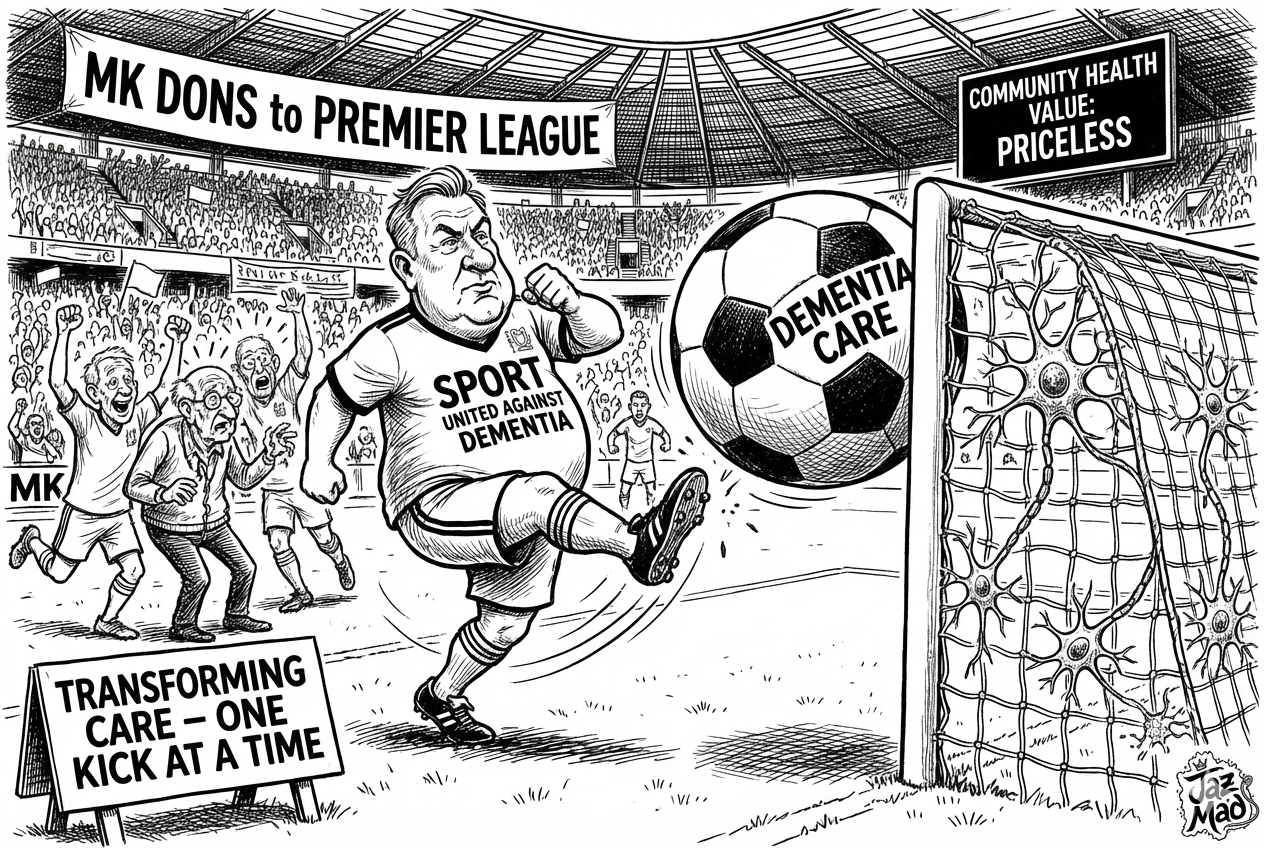
For Peter Randall, a diagnosis of Alzheimer’s disease in 2023 changed everything, prompting his wife, Josie, to become his full-time carer. “Since Peter’s diagnosis, he’s been far more reluctant to get out of the house,” she explains. Yet, a lifeline appeared from an unexpected source: their local football club. The couple are now regular attendees at weekly physical activity sessions run by the MK Dons Community Trust, sessions Josie says have been “essential to his physical and mental wellbeing.” Their story is not an isolated one. Across the UK, a powerful trend is emerging where the humble football club is evolving beyond the pitch to become a vital and credible partner in community health and social care, offering a new playbook for how the third sector can tackle one of society’s most pressing challenges.
In Milton Keynes, the local club’s charitable arm, the MK Dons Community Trust, is a powerful example of this shift in action. The Trust operates a range of initiatives designed to harness the power of football to improve local lives. One of their flagship programmes, launched in partnership with Milton Keynes Council’s Admiral Nurses, provides weekly multi-sport activity sessions for adults living with neurological conditions, brain injuries, and dementia. For participants like Peter Randall, it is a chance to connect with like-minded people in a secure and comfortable environment. The sessions, priced at £6.50 per adult, with carers attending for free, also provide a sustainable funding model, as all proceeds are reinvested in the Trust’s community work.
The Trust’s impact extends beyond structured sessions. A recent festive surprise visit to Castlemead Care Home saw players from the club’s men’s and women’s teams join residents for their annual Christmas light switch-on. For Mark Johnston of the Community Trust, who organised the visit, the event had a profound personal resonance as his own mother is a resident at the home. “Walking through those doors, knowing she could be part of something that brings comfort and happiness, made this partnership deeply personal to me,” he said. The visit left a lasting impression, with Home Manager Grace Madenyika noting that the residents were “overjoyed.” Her conclusion perfectly captures the essence of this work: “It proved to us that football is about so much more than what happens on the pitch.” The work being done in Milton Keynes is a powerful local example of a much larger, coordinated movement gaining momentum nationwide.
This growing involvement is being strategically channelled through national campaigns, chief among them the Alzheimer’s Society’s ‘Sport United Against Dementia’. This initiative is helping to coordinate efforts across the football pyramid, turning individual club outreach into a unified force. The high-level commitment to this cause was recently demonstrated at a “Developing Dementia Initiatives workshop” hosted by the Premier League and the Professional Footballers’ Association (PFA), which brought together representatives from 16 clubs to share expertise and best practice. The breadth of this movement is clear from the variety of programmes emerging nationwide. Watford FC Community Trust runs a well-established “Golden Memories” programme, while the Brighton & Hove Albion Foundation offers “Albion Memories,” allowing fans and former players to connect over their shared love of the game. Support is also being formalised for those who dedicated their careers to the sport. The PFA has launched its own “Brain Health” initiative, backed by a £1m “Football Brain Health Fund,” to provide financial and practical support for former players and their families affected by neurodegenerative diseases. This growing network of support is a crucial response to a stark national reality: there are an estimated 982,000 people living with dementia in the UK today. This national commitment raises a crucial question: why is football proving to be such a uniquely effective partner in this field?
The success of these initiatives lies in football’s unique ability to act as a “strengths-based solution” for community health. Unlike more clinical interventions, sport-based programmes foster social connection and reduce stigma in an accessible, enjoyable way. This approach is particularly effective at engaging groups, such as men, who might not traditionally seek help from formal health services. The club badge acts as a powerful, trusted symbol that can open doors that might otherwise remain closed. Participation creates what a recent World Innovation Summit for Health (WISH) report calls a “virtuous circle of sport, health and mental health,” where physical activity directly improves wellbeing by reducing symptoms of depression and anxiety, which, in turn, build psychological resilience, self-esteem, and social skills. This model is not just socially valuable; it is also economically sound. Social Return on Investment (SROI) modelling suggests that for every £1 invested in community sport in the UK, the resulting health and social benefits can be valued at between £1.20 and £3.42. This commitment is seen as fundamental to the club’s identity. As Simon Crampton, Dons’ Football Operations Director, puts it, this kind of community connection is “at the fabric of what we do at MK Dons.” This deep-seated commitment is transforming clubs into powerful engines for social good, creating new opportunities for collaboration across the sector.
The growing role of football clubs in dementia care marks a significant evolution, transforming them from simple entertainment entities into crucial, credible partners in community health delivery. As this movement gathers pace, the potential for deeper collaboration between the sporting world and the third sector becomes ever more apparent. Experts like Matt Hughes Short from the Alzheimer’s Society emphasise that creating a “shared vision” is fundamental to developing leading support mechanisms, while Joe Costello of Dementia UK highlights the “importance of collaboration” to ensure everyone facing dementia can access specialist support when they need it most. This trend offers more than just a new service delivery model; it presents a new way of thinking. What could this new playbook—leveraging the power of trusted, local institutions—mean for the future of social care, and what other cornerstones of our communities hold similar untapped potential to help solve society’s greatest challenges?