Mission-Focused, Future-Ready: The Strategic Shifts Powering UK Charities
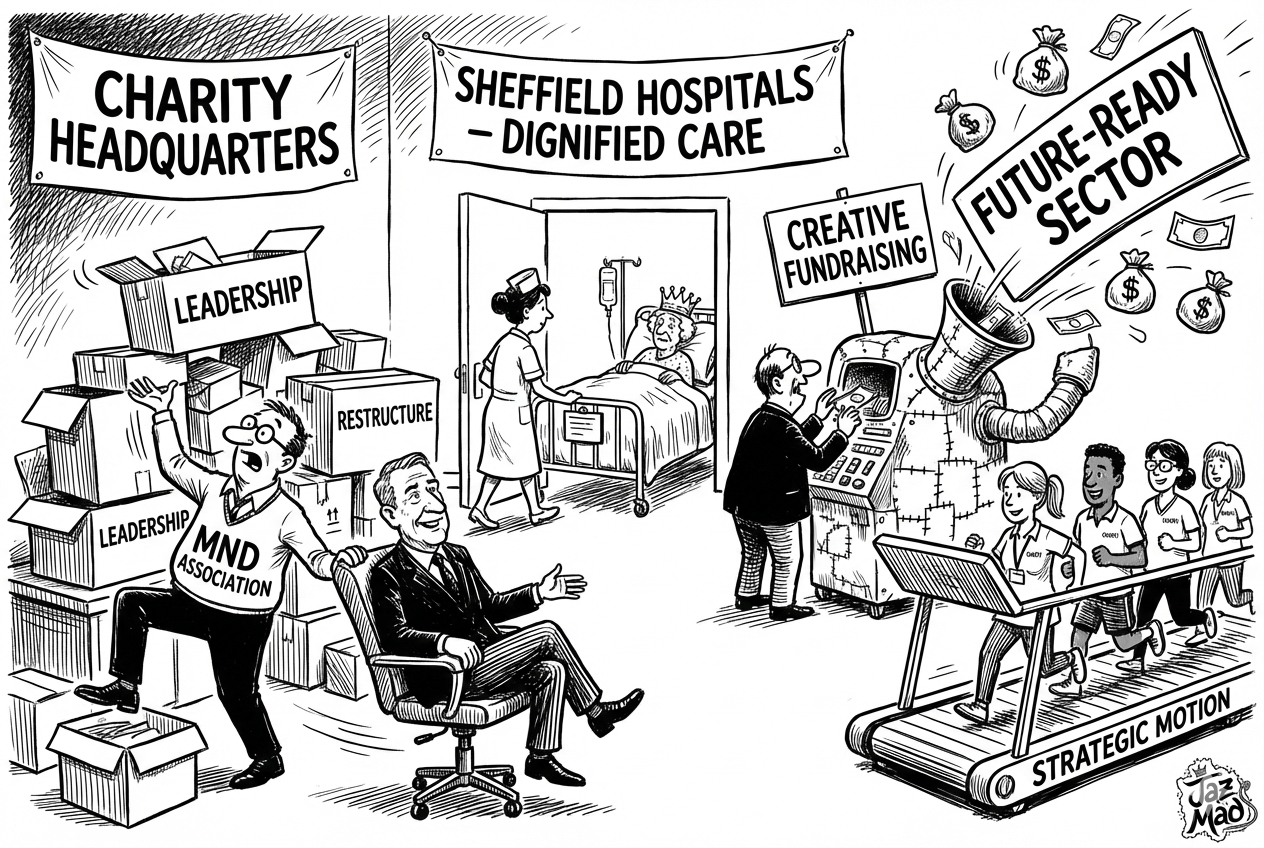
Recent headlines from across the UK charity sector paint a picture of dynamic activity: a new chief operating officer here, a major fundraising appeal there, an innovative community service launched elsewhere. Viewed in isolation, these are commendable achievements. Taken together, however, they reveal a deeper, more significant trend. This is not just business as usual; it is a sector in strategic motion. From bolstering leadership teams with specialised expertise to reimagining service delivery with a focus on human dignity, charities are proactively strengthening their foundations. They are modernising operations, deepening community ties, and sharpening their focus on their core mission to enhance impact and build the operational resilience and community trust essential for navigating a volatile future.
Bolstering the Engine Room: A Focus on Strategic Leadership and Governance
In an era of rising demand and volatile income streams, expert leadership and robust governance have become vital for sector stability. Charities are strategically reinforcing their senior teams, fostering confidence that they are building a resilient future for stakeholders and communities alike.
The MND Association, following a period of significant growth, has created a new Chief Operating Officer role for Quinton Newell. His extensive background at NIHR and Cancer Research UK brings a wealth of experience in managing core operational functions—from Finance and Technology to Strategy and Compliance—that underpin frontline work. The move is a deliberate effort to strengthen the ‘behind the scenes’ systems needed to deliver on the charity’s ambitious five-year strategy. As Chief Executive, Tanya Curry notes, Newell will “play a key role in driving forward our strategy.
Similarly, the British Heart Foundation (BHF) has made Chris Brocklesby’s position as Chief Technology Officer permanent, signalling a deep commitment to digital transformation. Tasked with overseeing a multi-year programme to deliver new CRM, retail, and finance systems to support its vast network of 660 stores and online presence, Brocklesby brings crucial commercial-sector experience from brands like the Post Office, Dunelm, and EasyJet. According to BHF Chief Executive Dr Charmaine Griffiths, Brocklesby’s “decades of experience” are “helping us enhance our use of technology and maximise our ability to fund life-saving research.” The combination of the MND Association’s focus on internal process and the BHF’s investment in external-facing technology illustrates a pincer movement in sector strategy: strengthening the back-office engine to power a more sophisticated digital frontline.
This strategic thinking extends to the boardroom. The appointment of Nicolas Breteau, CEO of TP ICAP Group PLC, as a Trustee for Rays of Sunshine illustrates how corporate partnerships can mature into vital contributions to governance. Breteau’s leadership experience and influential network are seen as key assets. According to CEO Amy Chambers, he “will challenge us to think bigger and bolder about our ambition.”
These appointments are clear indicators that charities are investing in the leadership and operational expertise needed to build a sustainable future, ensuring every internal improvement is ultimately felt by those they serve, a principle of dignified and innovative delivery.
More Than a Service: Delivering Impact with Dignity and Innovation
Effective service delivery in the modern charity sector transcends merely meeting basic needs. The focus is shifting towards creating therapeutic, dignified, and profoundly person-centred environments that support wellbeing in its fullest sense. Two recent examples powerfully illustrate this commitment to enhancing the user experience, proving that how a service is delivered is just as important as what is delivered.
In Sheffield, a £415,000 grant from Sheffield Hospitals Charity has helped transform the Maple Ward, a mental health facility. The refurbishment goes far beyond a simple cosmetic upgrade. The charity’s funding has enabled the creation of specific features designed to foster a supportive recovery environment. These include autism-friendly bedrooms with controllable lighting and soundproofing to reduce sensory overload, as well as a therapeutic outdoor garden with sensory plants. According to Sheffield Hospitals Charity CEO Beth Crackles, the goal was to create a ward that “feels calmer, safer and more dignified for service users.”
This theme of dignity was echoed at the Houses of Parliament, where the Vegetarian for Life (VfL) Awards celebrated excellence in plant-based care catering. The event framed food not just as sustenance, but as a fundamental aspect of identity and respect. By honouring caterers who provide innovative and compassionate vegetarian and vegan meals in care settings, VfL highlighted a crucial, often-overlooked component of person-centred care. As Amanda Woodvine, VfL Chief Executive, explained, in a care setting, food is “one of the most tangible expressions of respect,” and when organisations get it right, “it’s not just good catering – it’s good care.”
Whether through the physical architecture of a ward or the choices on a menu, these initiatives demonstrate a deep understanding that true care involves upholding the dignity and individuality of every person. This commitment, in turn, depends on the unwavering fundraising and community support required to make such vital work possible.
Forging Deeper Connections: Creative Fundraising and Community Commitment
Securing sustainable funding is a constant challenge for every charity. In response, organisations are moving beyond traditional methods, developing more creative and engaging strategies that build deeper, more meaningful connections with their communities. From powerful personal storytelling to innovative service models, these approaches demonstrate a sophisticated understanding of what motivates modern supporters.
A powerful example of personal storytelling comes from Francis House Children’s Hospice. Its “Love and Life” Christmas appeal is anchored by a moving film about 11-year-old Florence and her mother, Jen East. By sharing their personal journey, the hospice makes its staggering £5.8 million annual running cost tangible and emotionally resonant. As Jen East explains, Francis House is more than a facility; it is a “lifeline” and a “home from home,” a sentiment that powerfully conveys the value of every donation.
In contrast, Shooting Star Children’s Hospices has embraced a sustainable service model through its Christmas tree collection. This initiative is a masterclass in reciprocal value: for a donation, the charity provides a practical, eco-friendly solution to a common post-holiday problem. In partnership with JustHelping and sponsored by Ridge, the scheme not only raises vital funds but also reinforces the charity’s community presence and commitment to sustainability by reducing carbon emissions.
A third approach is the formal pledge of support, exemplified by Shropshire PCAS signing the Armed Forces Covenant. This is not a direct fundraising campaign but a public declaration of commitment to a specific community. By signing the covenant, the charity formally recognises the unique challenges faced by veterans who, as founder Simon Arthur notes, often carry scars that are “physical, mental or both.” This act reinforces trust and solidifies the charity’s role as a dedicated ally, strengthening its community standing.
Together, these strategies reflect a sector-wide move away from monolithic fundraising towards a diversified portfolio of engagement, where emotional connection, reciprocal value, and principled alignment co-exist to build a more resilient funding base.
A Sector in Strategic Motion
The recent activities across the UK’s third sector are far more than a collection of isolated news items. They are interconnected signs of a sector engaged in a deliberate and strategic evolution. The conscious strengthening of leadership with commercial and operational expertise, the profound commitment to delivering services with dignity and innovation, and the creative diversification of fundraising and community engagement all point to a single, overarching goal: building more resilient, impactful, and future-ready organisations. These are the actions of a sector that understands the world is changing and is adapting proactively to meet its demands. The key question for the years ahead will be how effectively these new technological capabilities, strengthened governance structures, and deeper community bonds can be leveraged to navigate an ever-more complex landscape and continue delivering on their vital missions.