The Derbyshire Blueprint: How One Social Enterprise is Closing the Gap Between Carers’ Rights and Reality

Introduction: The Widening Gap Between Carers' Rights and Reality
Carers' Rights Day, held annually on November 20th, serves as a critical focal point for the UK’s third sector. This year, its theme—' Know your rights, use your rights'—cuts to the heart of a persistent challenge facing the nation's 5.8 million unpaid carers. According to Carers UK, an estimated 12,000 people take on caring responsibilities every single day, many of whom are thrust into the role unexpectedly and remain unaware of their legal entitlements. This creates what sector analyst Jasper Maddox describes as a “cavernous gap between abstract rights and the lived reality” of those providing essential care. While national campaigns raise vital awareness, the real work of closing this gap happens on the ground. In Derbyshire, a series of local events hosted by a new social enterprise, The Disability Syndicate, provides a compelling case study in how to translate national policy into tangible, community-based support, offering a practical blueprint for the entire UK charity sector.
A New Blueprint in Practice: The Disability Syndicate's 'One Stop Shop'
To understand the strategic importance of The Disability Syndicate’s work, it is first necessary to examine its innovative structure and the specific actions it took on Carers' Rights Day. On November 20th, the organisation held free drop-in events at Chesterfield Library and Derby's Market Hall, alongside a dedicated carers' clinic at its Pride Park base. These were not just awareness-raising exercises; they were practical, on-the-ground interventions designed to connect carers directly with the support they are entitled to.
The Disability Syndicate is a new Derby-based social enterprise that functions as a comprehensive “One Stop Shop.” It formally unites three established providers—Blue Sky Brokers, DD Payroll Services, and the Kate Garraway-backed Blue Sky Social Care Card—under a single, integrated roof. This structure is designed to address the fragmented nature of social care support. As Managing Director Raj Johal explains, the mission is driven by a passion for helping people “live independent, dignified lives and for carers to get the support they need in a profession that often feels invisible to the wider public.”
To achieve this, the Syndicate offers a holistic suite of services designed to simplify the complex landscape of social care:
-
Financial Management: Managing payroll for those employing personal assistants, handling pre-paid cards for direct payments, and offering welfare rights advice.
-
Recruitment and Employment Support: Running a PA Hub to help recruit personal assistants, providing DBS checks, and offering advice on employment law.
-
Carer Wellbeing: Providing free talking therapies, fortnightly carers’ clinics, and wellbeing initiatives.
-
Recognition and Practical Aid: Issuing the Blue Sky Social Care Card for ID and high-street discounts, and signposting to other local services and training.
This consolidation of essential functions provides more than just convenience; it forms the practical foundation for turning abstract national policies into tangible local support, a dynamic which warrants closer analysis.
Analysis: Translating National Policy into Tangible Local Support
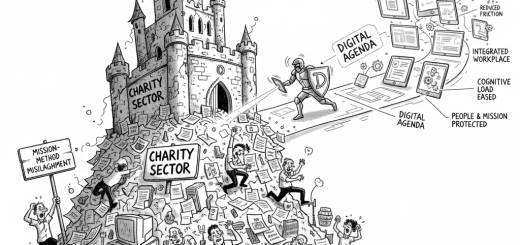
The strategic genius of the Syndicate’s model is its focus on building the practical infrastructure that makes abstract rights accessible. By deconstructing the systemic barriers carers face, it becomes clear how this integrated approach provides concrete solutions to translate national legislation into a daily, lived experience.
Financial Rights and Recognition
On paper, carers are entitled to financial support, such as Carer's Allowance, which could be worth up to £83.30 a week in 2025/26. However, the reality for many is a bewildering benefits system that is difficult to navigate, compounded by a feeling that their crucial role in society goes unrecognised.
The Syndicate’s model provides a multi-pronged, practical response. DD Payroll Services directly addresses the administrative burden by managing direct payments and handling HMRC, wages, and pensions for employers of personal assistants. The fortnightly carers' clinics offer free, expert welfare rights advice, guiding individuals through the benefits maze to ensure they claim what they are owed.
Furthermore, the Blue Sky Social Care Card addresses both financial hardship and the need for recognition. Endorsed by TV journalist Kate Garraway, the card provides access to tangible high-street discounts—such as at Derby restaurants including Nicco’s, The Viceroy and House Boat—for an annual fee of just five pounds. Crucially, it also functions as the “first UK-wide, fully vetted ID card” for both paid and unpaid carers. With 10,000 users already signed up in its first year, the card serves a powerful dual purpose: it offers direct financial relief while making the invisible role of a carer visible and valued.
Workplace and Practical Rights
Recent legislation, including the Carer’s Leave Act 2023, grants employees the right to one week of unpaid leave, while the Employment Rights (Flexible Working) Act 2023 allows requests for flexible working from day one. However, for many carers, these rights are an “unusable privilege.” The primary systemic barrier is the lack of reliable, trustworthy replacement care, which prevents them from stepping away from their responsibilities.
The Syndicate’s PA Hub functions as the critical missing infrastructure, transforming the Carer's Leave Act from a well-intentioned but often hollow promise into a practical, usable right for working carers by helping individuals recruit vetted personal assistants. This is complemented by services that mitigate the immense personal cost of caring. In its State of Caring 2025 report, Carers UK found that 74% of carers feel stressed or anxious. The Syndicate's provision of free talking therapies and wellbeing initiatives acts as a direct, targeted countermeasure to this national crisis, ensuring carers are supported in both their professional and personal lives.
Strategic Implications for the Third Sector: A New Model for Impact and Sustainability?
For charity professionals, trustees, and policymakers, The Disability Syndicate's model offers more than just an effective case study in service delivery; it presents potential solutions to the sector's long-standing challenges of service fragmentation and financial insecurity. As Jasper Maddox notes in his analysis, the Syndicate represents a “provocative blueprint” for the sector and a “necessary evolution” in how social care support is structured and funded.
The key to this evolution is its structure as a social enterprise. The Disability Syndicate delivers essential, high-quality services, and all profits are donated to its parent charity, Disability Direct. Founded in 1993 by a group of disabled people and now the largest user-led charity in the East Midlands, Disability Direct’s mission is fuelled by a virtuous cycle where impact funds sustainability. By generating its own revenue, the organisation moves beyond the constraints of traditional grant-based funding, building the financial resilience needed for long-term planning.
This model enables a strategic pincer movement for advancing carers' rights. While national bodies like Carers UK apply top-down pressure on Parliament to legislate systemic changes—such as making caring the 10th protected characteristic under the Equality Act—local, integrated providers like the Syndicate build the bottom-up infrastructure to ensure those rights, once won, are immediately deliverable to the people who need them most.
Conclusion: From Local Action to a National Lesson
While national awareness days are vital for highlighting the challenges faced by carers, the work of local, integrated organisations like The Disability Syndicate is essential for closing the gap between policy and practice. Its proactive intervention on Carers' Rights Day demonstrates a powerful model for turning abstract entitlements into tangible support. The key lessons for the wider third sector are clear: the effectiveness of “one-stop-shop” models in overcoming service fragmentation and the strategic power of social enterprise structures for building mission-focused financial resilience. The rapid uptake of the Blue Sky Social Care Card, which attracted 10,000 users in its inaugural year, offers powerful evidence of the vast, unmet demand for both practical support and meaningful recognition. Ultimately, the replication of similar integrated, enterprise-led approaches is not just a possibility; it is an imperative for any organisation serious about delivering impactful and sustainable support to the UK's millions of unpaid carers.
You may also like...