The Perfect Storm: Why a National Crisis Has Left Thousands of Children Waiting for a Home
A Crisis of Homes
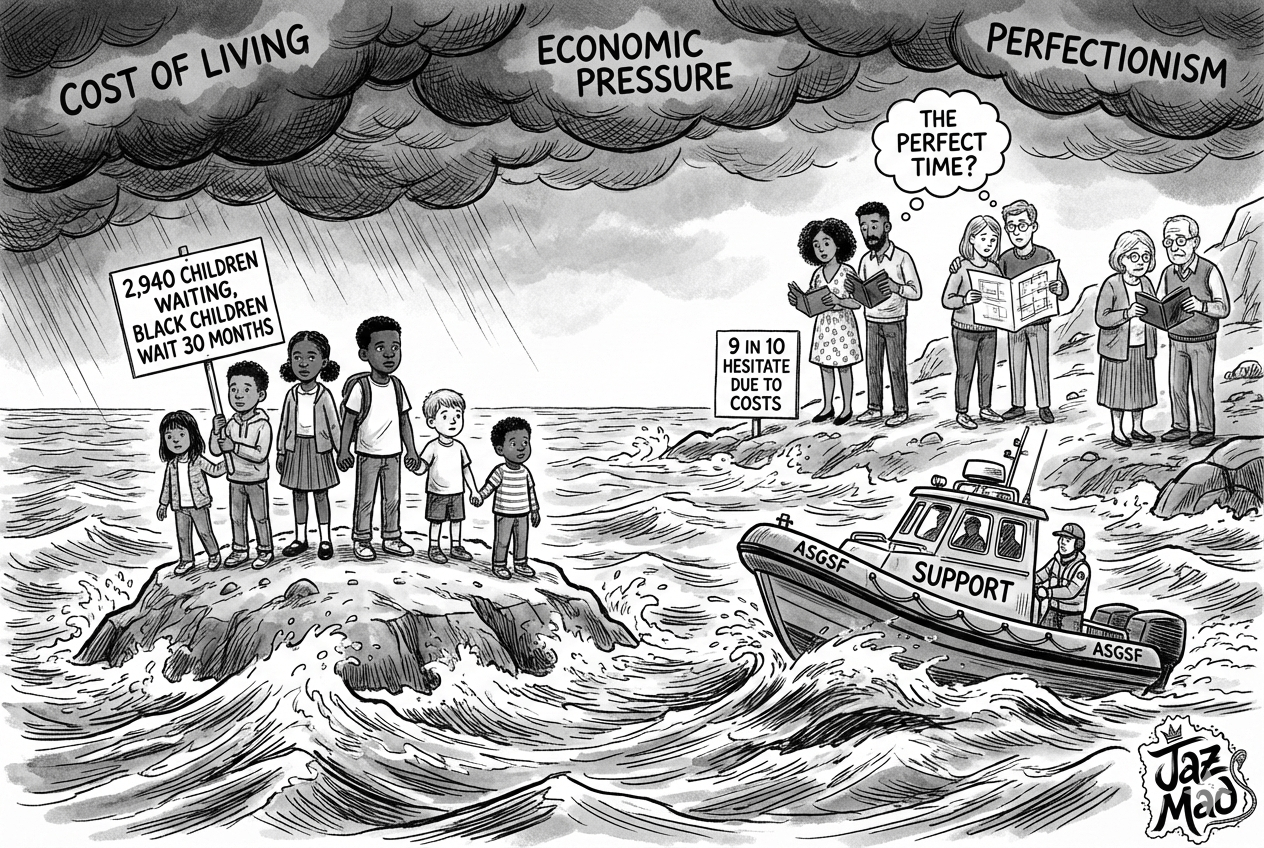
For the first time in recent years, a stark and troubling reality has emerged in the UK’s adoption landscape: there are now more children needing a permanent, loving home than there are people coming forward to adopt them. Adoption experts describe this as an “unprecedented” and “concerning” decline, with data revealing a 14% increase in children needing a family. This leaves 2,940 children across England waiting, and with a devastating urgency, almost half of them have been waiting more than 18 months since entering care. This alarming trend is inextricably linked to the cost-of-living crisis, which a recent survey found has directly affected the adoption decisions of nine in ten prospective parents. This article will explore the perfect storm of economic pressures and societal anxieties driving this crisis, examine the sector’s unified response, and highlight what this means for the thousands of vulnerable children waiting for a “forever home.”
The Perfect Storm: Why a National Drive for Adopters is Needed Now
The current shortfall in adopters is not a sudden event but the result of a “perfect storm” of economic pressures and deep-seated societal anxieties. This has prompted a unified and urgent response from the charity sector to find families for children who cannot afford to wait any longer.
At the heart of the crisis are parental anxieties about finding the “perfect time” to start a family—a significant barrier for many would-be adopters. A new survey reveals that while 72% of parents acknowledge that a truly “perfect time” doesn’t exist, the desire for ideal circumstances holds many back. This perception, however, often clashes with the reality of parenthood. Adopters Sara and Stu, who adopted three children, stress the human element over material wealth: “You don’t need millions of pounds; you don’t need a mansion… It’s a journey, but it’s for the right reason, and the rewards are endless.” Similarly, Rachael and Paul, who adopted three siblings, describe a long path to parenthood but ultimately embraced the opportunity, saying, “we loved the idea of siblings being able to stay together, so we said yes.”
In response, the third sector has launched a coordinated effort to demystify the process. The national #YouCanAdopt campaign provides the air cover, broadcasting a message of inclusivity, while charities like Diagrama Foundation and Parents and Children Together (PACT) are on the ground, turning national interest into local action through community-specific events like drop-in coffee mornings in Croydon and ‘meet the team’ sessions in Milton Keynes. Susy White, Chief Executive of Adoption Matters, underscores the urgency: “This is impacting on the time children are spending waiting for their adoptive family… Adoption Matters offers support and guidance from that very first phone call, to your first grandchild – we are there every step of the way.”
While these recruitment drives are vital, the sector is also grappling with deeper, systemic challenges that determine which children wait the longest.
Confronting the Reality of Racial Disparity
While the overall number of waiting children is critical, a deeper analysis reveals significant racial disparities. This is a devastating consequence of the main storm, where systemic biases act as dangerous crosswinds, leaving some children far more exposed than others. Addressing this inequality has become a major priority for sector leaders, who argue that the colour of a child’s skin should never determine their chances of being adopted.
The statistics, laid bare in the Ending Racial Disparity in Adoption report from the Adoption and Special Guardianship Leadership Board, are stark. The number of Black children adopted has fallen dramatically, from 120 in 2015 to just 60 in 2020. Furthermore, while Black children make up 7% of all looked-after children, they represent only 2% of those adopted. They are overrepresented in the care system, wait significantly longer, and are ultimately the least likely of all ethnic groups to achieve the stability of a loving family through adoption.
To combat this, the sector has proposed a “three-fold strategy” focused on recruiting more Black adopters, rebuilding trust between Black communities and social services, and better resourcing for interracial adoptions. Research highlights a critical need for systemic change within the social work profession itself, with one survey finding that 60% of Black adults would prefer to be assessed by a social worker with a similar ethnic background to their own.
This focus on systemic inequality extends to another significant cohort of children who are too often overlooked: those who are no longer babies.
The Children Who Wait Longest: Changing Perceptions of Adopting Older Children
The public image of adoption often centres on babies, yet within the perfect storm of the current crisis, it is older children who are left most exposed by the crosswinds of public misconception. Finding loving homes for these children is of strategic importance, as they frequently wait the longest. Challenging the myths surrounding older child adoption is therefore a key objective for agencies across the country.
Organisations like Adopt Birmingham and the lived experiences of adoptees highlight several practical advantages to welcoming an older child into your family, though these come with profound responsibilities.
- Deeper Connection: An older child can communicate their thoughts and feelings, allowing for a more immediate bond over shared interests. This can help build a sense of belonging and acceptance within the family dynamic.
- More Known History: Agencies highlight that with older children, prospective parents receive a more comprehensive history of their development, personality, and needs. However, this advantage comes with a profound responsibility. As one former foster youth warns, this history must be respected, not “eradicated.” The most successful families, they stress, are those who read the child’s file thoroughly and embrace their existing identity, culture, and history.
- A Different Kind of ‘First’: The fear of “missing out” is a common concern, but as Adopt Birmingham points out, there are countless meaningful firsts to share with an older child, from their “first birthday party” and “first visit from the tooth fairy” to their “first cuddle.”
Adoptees and former foster youth offer a crucial perspective: prospective parents must be prepared to embrace the child for who they are. One adoptee stressed the importance of reading a child’s file to understand their history and potential triggers. Another warned against the damaging mindset of trying to mould a child to fit a preconceived ideal. “Most foster/adoptive parents treat kids/teens like they are coming from a bad/wrong culture that needs to be eradicated,” they explained, emphasising that the most successful families are those who respect that the child already has an identity.
This journey of understanding and support continues for a lifetime, particularly within the education system.
The Lifelong Journey: Support, Trauma, and the Battle for a Fair Education
The granting of an adoption order is the beginning, not the end, of a complex and rewarding journey. For the 71% of adopted children who have suffered significant trauma, this journey requires a profound commitment, with education consistently being the biggest area of concern. The scale of this post-adoption challenge creates a vicious cycle: the sector struggles to recruit because the lifelong support system, especially in education, is perceived as broken, which in turn leaves more children waiting in care.
Evidence submitted to Parliament by Adoption UK reveals the immense educational challenges faced. An overwhelming number of adoptive familiesing 81% of adopted children, need more support in school than their peers, and nearly four in ten (38%) have missed school days due to mental health issues or anxiety. Many parents feel locked in a constant “battle to get the support that their child needs.”
This is not just perception; it is a systemic failure. According to Adoption UK’s Adoption Barometer 2020 report, a staggering 55% of adopted children with an EHCP were not receiving all the provisions outlined in their plan during 2019. Parents report that measures like Pupil Premium Plus are often used ineffectively, and they feel there is a lack of trauma-informed training for education professionals.
However, support is available. The government’s Adoption and Special Guardianship Support Fund (ASGSF) provides a fair access limit of £3,000 per child per year for therapy, helping families access vital interventions. This support, combined with the resilience of families, is the way forward. Miles Asteri, who adopted two daughters with his husband, offers a realistic perspective, acknowledging the “chaotic moments” but describing the journey as “rewarding like nothing else.”
An Urgent Call for ‘Imperfectly Perfect’ Families
A perfect storm of intense economic pressure, parental anxiety, and deep-seated systemic challenges has created an adoption crisis in the UK. This has left thousands of vulnerable children—particularly Black children and older children—waiting anxiously for a permanent, loving family. In response, the charity sector has issued a unified and urgent message: the “perfect time” to start a family is a myth, and comprehensive support is available every step of the way. The journey is not always smooth, but the rewards are unparalleled. For the thousands of children currently in care, the need for stability, love, and commitment is immediate. The perfect time, for them, is always now.