From Firewalks to Financial Deficits: How City Hospice is Rallying Cardiff to Secure its Future
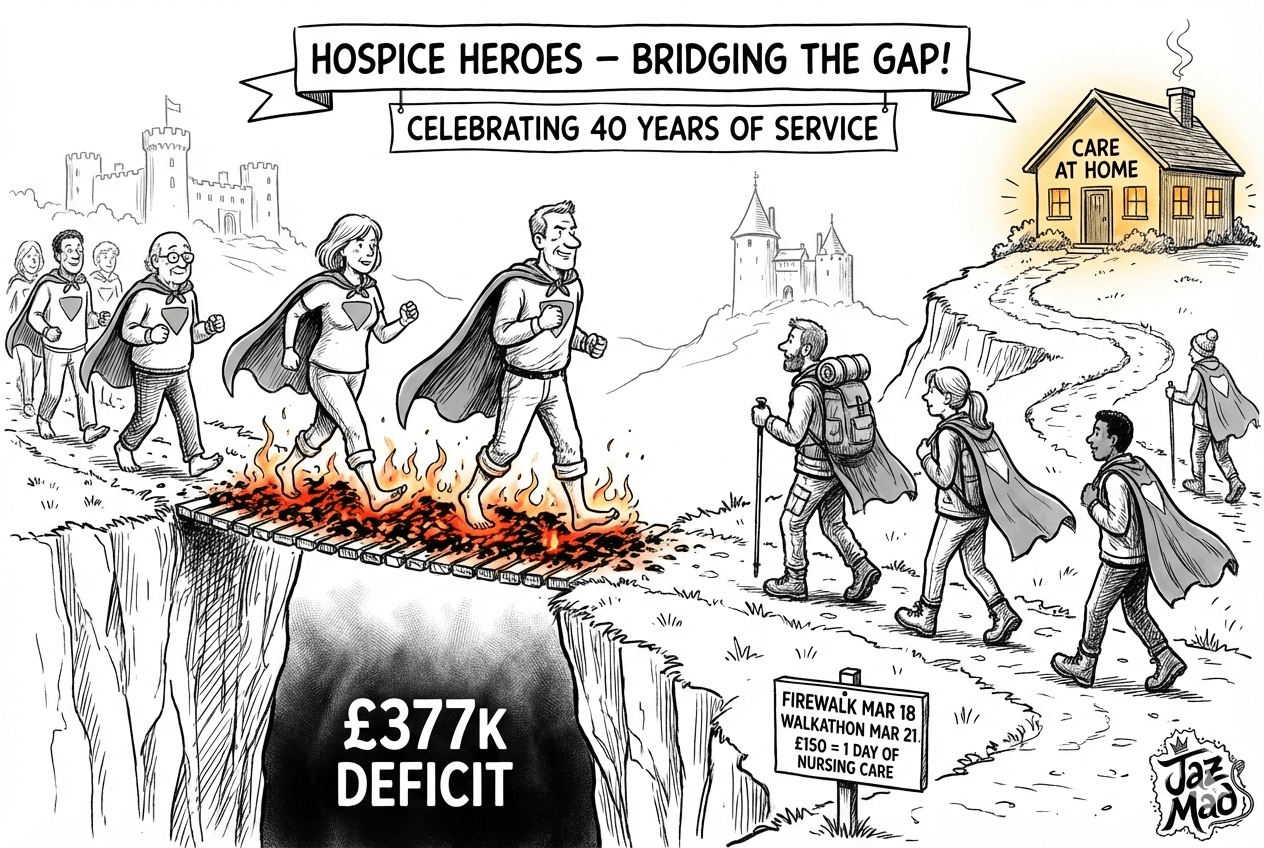
As the new year dawns, the familiar refrain of “new year, new me” echoes through personal and professional resolutions across the country. For Cardiff’s City Hospice, however, this sentiment is being channelled into a mission of critical importance. The charity, which has provided specialist palliative and end-of-life care to the city’s residents for 40 years, has launched its “Hospice Heroes” campaign, a call to arms for the community to help protect its four-decade legacy. This is not just a seasonal appeal; the organisation’s latest annual report reveals the stark reality of operating with a significant financial deficit, making the success of its fundraising efforts directly proportional to its ability to continue serving Cardiff’s most vulnerable.
In response to these financial pressures, City Hospice has launched a multi-faceted public fundraising drive for 2026, centred on the ambitious “Hospice Heroes” brand. The campaign is spearheaded by two unique challenge events in March, with further opportunities for supporters to get involved later in the year through high-profile runs such as the Cardiff Half Marathon and the TCS London Marathon. First is the Firewalk, a unique test of courage scheduled for 18 March 2026. Proudly sponsored by Keen Insurance, the event challenges participants to walk barefoot over glowing embers, with each fundraiser required to raise a minimum of £150. A participant from the previous year recalled the profound impact: “The adrenaline, the cheers, the sense of achievement – the Firewalk pushed me far beyond my comfort zone. I walked away feeling proud, inspired and honoured to support City Hospice and the vital care they provide.”
Just days later, on 21 March, the focus shifts to a test of endurance with the Hospice Heroes Walkathon. This extraordinary 26-mile hike, equivalent to a full marathon, takes participants along the scenic Taff Trail from Cyfarthfa Castle to Castell Coch. With a fundraising target of £175, it offers an opportunity to walk in memory of a loved one or simply embrace a personal challenge. As a participant from last year’s group of 18 fundraisers shared, “There were times when my legs wanted to quit, but the cheers from fellow walkers and knowing we were fundraising for such an important cause kept me going.” The strategic intent behind this push is clear. Mac Smith, Fundraising and Events Manager, articulated the goal directly: “We hope to see even more people take on the Walkathon and Firewalk in 2026; we’d love to double the number of participants for both events.” This drive to significantly increase participation is not merely aspirational; it is a calculated response to pressing financial realities that threaten the hospice’s future.
The ambitious campaign is a necessary reaction to documented financial pressures. The charity’s Financial Statements for the year ended 31st March 2025 paint a clear picture of the fiscal landscape. While the organisation generated a total income of £3,199,502, its total expenditure reached £3,572,459, resulting in a net expenditure (deficit) of £377,887 for the year. However, the Chair of the Board of Trustees, Michael Baker, frames this figure within a wider strategic context. In his report, he notes that while the year was financially challenging, the deficit was smaller than budgeted, representing a “positive trend.” He adds that the board’s strategy of drawing on reserves to invest in services is “beginning to bear fruit,” signalling a proactive approach to management. This forward thinking is essential, as financial pressures are set to continue. With a further budget deficit of £330,364 anticipated for 2025/26, the success of the 2026 “Hospice Heroes” campaign is crucial for the organisation’s long-term sustainability and its ability to continue serving a community it has supported for 40 years.
Every pound raised is directly translated into delivering the charity’s core mission: enabling patients to receive expert care at home, providing the support that allows them to die in their preferred place of death—most often their own home—with dignity. This is where the numbers on the balance sheet translate into human impact, ensuring individuals receive compassionate, professional care alongside counselling, bereavement support, and welfare advice for their families. To make the fundraising goals tangible, the hospice provides a powerful metric: the £150 sponsorship target for the Firewalk is equivalent to funding a full day of nursing care delivered by a Clinical Nurse Specialist. This transforms an abstract target into a concrete and deeply meaningful outcome. This public-facing fundraising is complemented by the ‘Pledge Partner’ corporate scheme, which invites businesses to fund tangible periods of care through tiered annual pledges, from a ‘Silver’ partnership at £750 to fund a week of care, up to a ‘Platinum’ pledge of £3,000 to cover a full month.
After four decades of service, City Hospice stands as a vital institution in Cardiff. It is meeting a difficult financial reality not with retrenchment, but with a proactive, creative, and deeply community-centric strategy. The “Hospice Heroes” campaign is more than a series of fundraising events; it is a vital mechanism for ensuring the charity can continue its essential work of providing dignity and comfort to families during life’s most difficult moments. As the sector faces widespread funding challenges, many will be watching to see if this blend of energetic community engagement and strategic financial management can provide a sustainable model for the future of local hospice care in the UK.