The Sound of Solace: Why Music Therapy is a Lifeline for Children’s Hospices—And a Symbol of Their Funding Crisis
The Sound of Hope and a Pressing Need
The scene at the ‘Joyful Voices’ winter concert for Noah’s Ark Children’s Hospice was one of pure festive spirit. Internationally renowned soprano Carly Paoli, whose voice His Holiness, Pope Francis, described as angelic, led a heart-warming performance alongside the combined children’s choirs from five local primary schools. The event, held at Allum Manor Hall in Elstree, brought together 300 guests in a celebration of community and music.
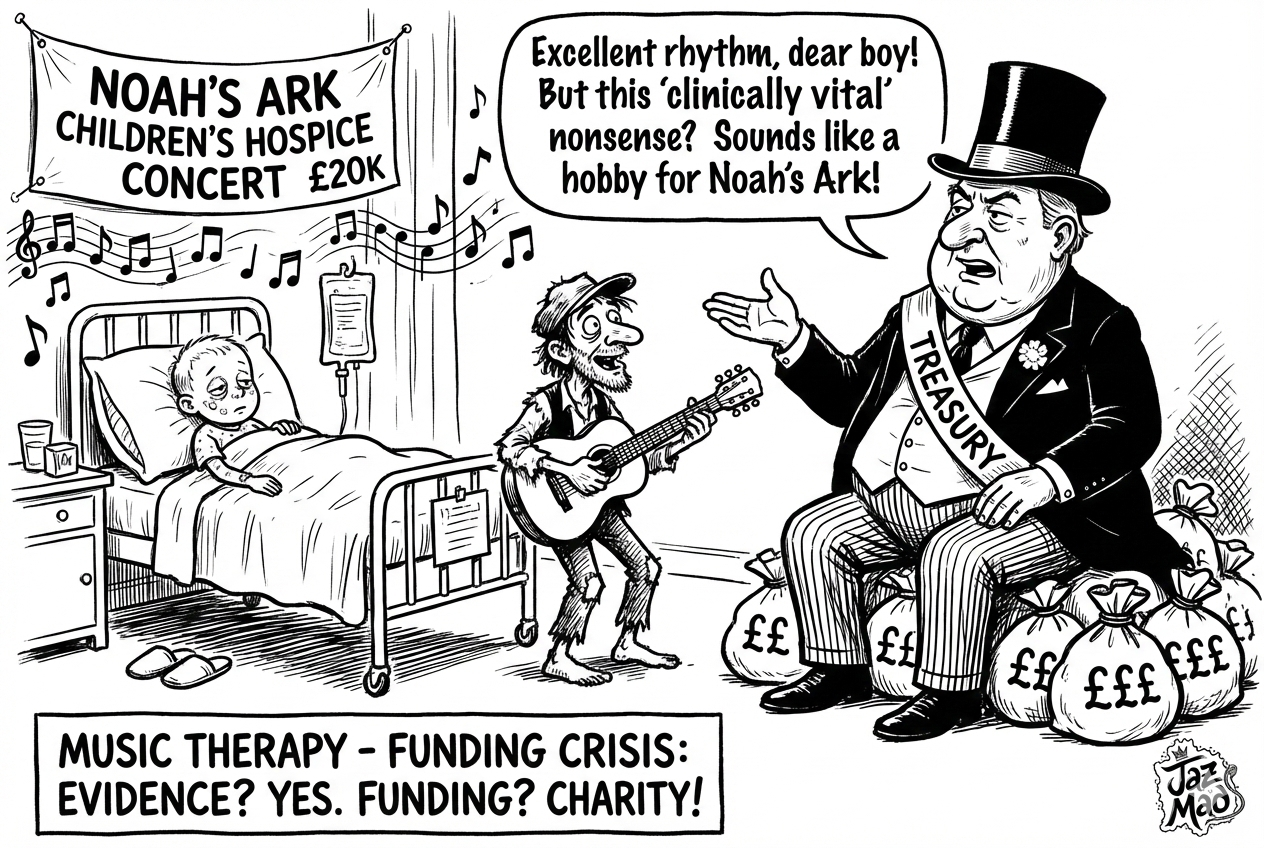
The concert raised an incredible £20,000 for the hospice. While such events are vital demonstrations of community goodwill and essential fundraising, they also cast a spotlight on the precarious funding of services like music therapy within the UK’s children’s palliative care sector. The passion and generosity on display are both the sector’s greatest strength and a sign of its systemic vulnerability. This raises a crucial question for charity leaders and policymakers alike: why has music become such a critical, yet charitably-dependent, lifeline for children with life-limiting conditions and their families?
The Human Story: A Concert and a Cause
To understand the sector-wide challenges, we must first ground them in a relatable human narrative. The ‘Joyful Voices’ concert serves as a powerful case study, illustrating the profound personal connections that drive these fundraising efforts.
At the heart of the event was the Hainbach family—Tom, Katie, and their three children, Leia, Robin, and Dylan. Leia, aged six, has a rare mitochondrial disease and receives essential music therapy and overnight respite care at Noah’s Ark. For her parents, the hospice is an indispensable source of support. Katie, a trained opera singer herself, not only performed at the concert but was instrumental in its organisation.
“It was a true pleasure to help organise and perform at the Joyful Voices Concert,” Katie said. “Noah’s Ark does such important work for families like ours, and we are so honoured to be able to give back and raise awareness of the vital services they offer.”
This sentiment of giving back was echoed by the concert’s star, Carly Paoli. She was moved by the collaborative spirit of the evening. “That will be my abiding memory,” she reflected, “children helping other children. To me, that is the spirit of Christmas.”
For the hospice leadership, the event’s value extended beyond the funds raised. Alison Goodman, Deputy CEO of Noah’s Ark, emphasised the wider impact. “These events are not only an amazing way for our community to come together,” she explained, “they are also important opportunities for us to highlight our work, engage new supporters, and raise the essential funds needed to continue supporting our children and families.”
The passion of families like the Hainbachs raises a critical question for the sector: What are the proven benefits of music therapy that make it so indispensable? The clinical evidence provides a compelling answer.
The Evidence: Why Music Therapy is Not Just a ‘Nice-to-Have’
For sector leaders grappling with the core palliative care challenges of pain management, non-verbal communication, and family bereavement support, the evidence base for music therapy offers clinically-validated, non-pharmacological solutions. Far from being a peripheral comfort, it is a recognised intervention with a growing body of research demonstrating its profound impact. A synthesis of findings from academic reviews and submissions to parliamentary inquiries reveals a multifaceted therapeutic tool.
Key benefits include:
- Pain and Symptom Management: Music therapy can significantly reduce pain perception. A submission to the All-Party Parliamentary Group (APPG) for Children Who Need Palliative Care cited a meta-analysis showing a statistically significant difference in pain reduction for patients receiving music therapy compared to standard care. The mechanisms for this are complex, with a realist review from Queen’s University Belfast explaining that music acts as more than a simple distraction. It can influence “attention, affect, memories and interpretation,” effectively helping to regulate the brain processes that modulate the experience of pain. This finding is reinforced by other research cited in the APPG submission, including a 2016 systematic review by McConnell et al., which also reported significant improvements in pain among palliative care patients.
- Emotional and Psychological Support: For children who may struggle to verbalise complex feelings, activities such as musical improvisation and songwriting provide powerful alternative avenues for expression. These creative processes allow children to convey thoughts and feelings metaphorically, helping them process difficult emotions in a safe, therapeutic environment and build confidence.
- Family, Sibling, and Social Support: Shared music-making sessions create a unique space for connection. They help children practice social skills like listening and turn-taking, but more importantly, they provide a therapeutic environment for families to interact, create positive memories, and support siblings who are also navigating the emotional challenges of a brother or sister’s illness.
- Creating a Lasting Legacy: A particularly poignant application of music therapy is in legacy work. Children can create original songs or recordings, leaving behind a tangible piece of themselves for their loved ones. As highlighted in the Queen’s University Belfast review, this process offers a sense of completion and peace for the child, while providing immense comfort and a continued sense of connection for the family after their loss.
These are not simply enjoyable activities; they are clinically recognised therapeutic interventions that improve quality of life. This clinical importance makes their funding model a critical issue.
The Financial Reality: A Sector Reliant on Charity
The funding of children’s hospices is a central and persistent challenge for the UK charity sector. Despite providing essential, complex care, these organisations rely heavily on voluntary income, creating constant pressure to fundraise.
The data from hospices across the country paints a stark picture of this funding gap:
- Noah’s Ark Children’s Hospice has annual running costs of over £7 million. Fundraising and private donations account for a staggering 75% of this income.
- Naomi House & Jacksplace, which serves the Wessex region, needs to raise £8.5 million a year and receives less than 15% of its income from statutory sources.
- A national survey noted in the APPG submission revealed a clear trend: music therapy is overwhelmingly funded externally or through the specific fundraising efforts of each organisation, rather than being treated as a self-funded, core service.
This model, in which essential care depends on discretionary giving, creates an inherent instability for service providers. The scale of this challenge becomes clear when set against the national need: according to the charity Together for Short Lives, there are an estimated 49,000 children and young people in the UK living with life-limiting and life-threatening conditions.
The £20,000 raised by the ‘Joyful Voices’ concert is therefore both a significant achievement born from community effort and, in the context of a £7 million annual budget for just one hospice, a single drop in a much larger ocean of need.
A Growing Chorus: Music as a Movement
The Noah’s Ark concert is not an isolated event. It is part of a wider, national trend of the music world—from international stars to local school groups—mobilising to support children’s palliative care. This groundswell of activity, spanning from collaborations with international opera stars like Lesley Garrett to original compositions by schoolchildren at Ballywalter Primary, demonstrates a widespread recognition of music’s power to connect and heal.
Across the UK, similar stories are unfolding. In Bradford, Lesley Garrett has worked with over 1,000 schoolchildren in a series of singing workshops. In Northern Ireland, pupils of Ballywalter Primary School composed and recorded an original song, ‘Shining Little Stars’, to support their local children’s hospice. Meanwhile, hospices like St Peter’s in Bristol explicitly call on local choirs and bands to put on concerts as a reliable and engaging fundraising method.
These efforts, combining professional talent with grassroots enthusiasm, underscore the fundamental challenge: relying on a patchwork of goodwill to fund what is increasingly understood as an essential clinical service.
Turning Up the Volume on Sustainable Funding
This exploration of music in children’s palliative care reveals a powerful story. Music therapy is a clinically vital service that offers profound benefits for children and their families, from managing physical pain to providing emotional solace and creating lasting legacies. Its provision across the UK is a testament to the incredible power of community spirit and the tireless work of fundraisers.
However, its overwhelming reliance on charitable giving represents a systemic vulnerability. As the submission from Chiltern Music Therapy to the APPG inquiry powerfully recommends, music therapy should be “offered as a core part of treatment and intervention” for children and families affected by life-limiting illness.
The sector’s challenge is therefore twofold: to continue its remarkable fundraising efforts while simultaneously presenting a unified, evidence-based case to NHS commissioners and Integrated Care Boards that music therapy is not a charitable gift, but an essential component of paediatric palliative care. The goal must be to build sustainable funding models that recognise these therapies not as optional extras, but as a fundamental standard of compassionate and effective care, ensuring every child has access to their life-enhancing power.