The National Garden Scheme’s record £3.8m donation is a vital lifeline for UK health charities, highlighting its importance for community health support.
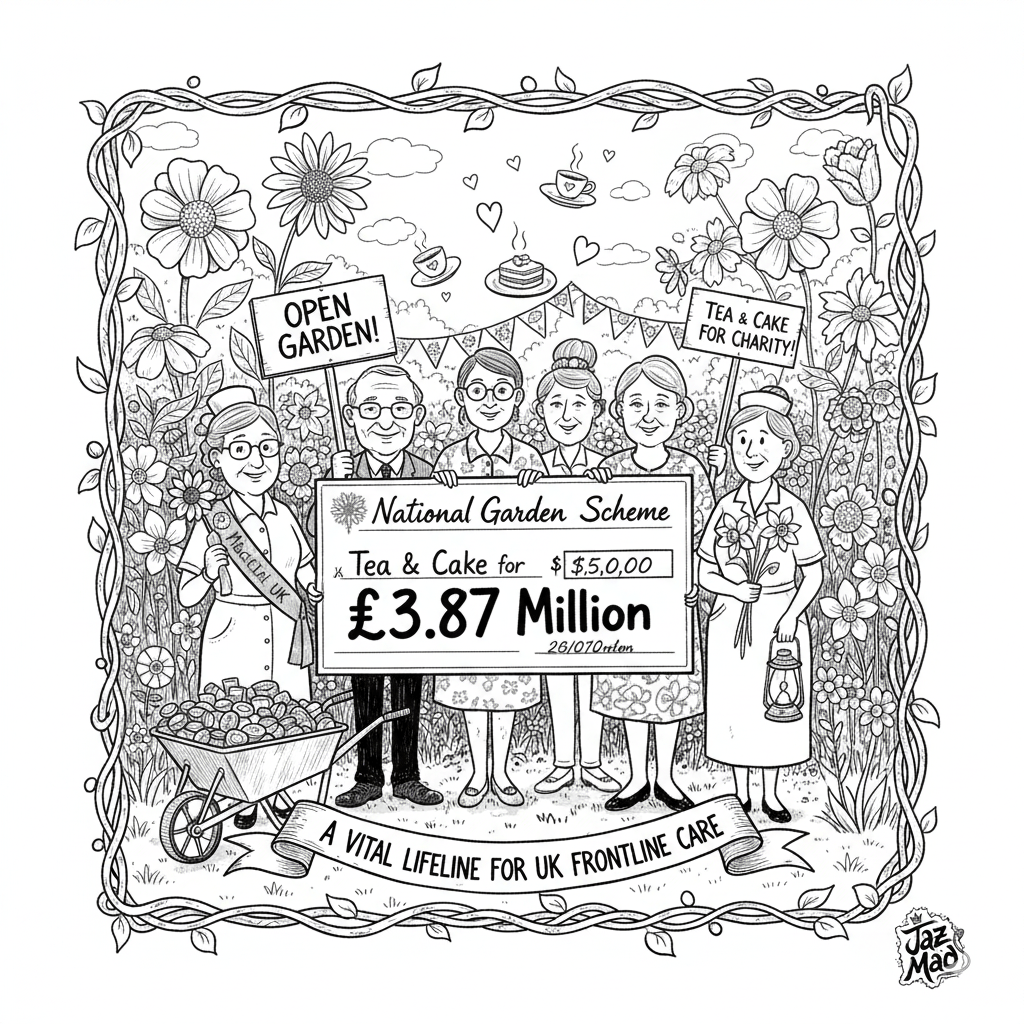
In an era of immense pressure on the UK’s public health services, a traditional, community-driven fundraising model is proving more vital than ever. The National Garden Scheme (NGS) has announced a record-breaking donation of £3,875,596 for 2025, raised through the simple yet profoundly effective act of opening private gardens to the public. This landmark achievement is not merely a fundraising success story; it represents a crucial and sustained lifeline for the nation’s leading nursing and health charities. As the NHS and social care sectors grapple with unprecedented demand, the funds generated by thousands of garden gates, cups of tea, and slices of cake foster a sense of community pride and shared purpose, supporting community nursing, end-of-life care, and vital respite for unpaid carers across the country.
This record donation is the culmination of a year’s dedicated activity across thousands of private gardens, a powerful demonstration of community-level fundraising that continues to build trust and confidence in the NGS’s approach. At a time when many charities are grappling with the high costs of digital donor acquisition, the NGS’s near-century-old model, rooted in community effort, remains a reliable and effective way to support vital causes. The impressive £3.875 million total was raised through visitor admissions and the sale of teas and cakes at over 3,500 private gardens across England, Wales, Northern Ireland, and the Channel Islands. This success reassures supporters that grassroots efforts can deliver lasting impact and stability.
As Chief Executive, Dr Richard Claxton highlighted, the impact is rooted in this shared purpose:
“Behind all this impact are the garden owners and volunteers whose enthusiasm and generosity of spirit make garden visiting such a pleasure – and whose commitment makes our work possible. We are equally grateful to every visitor who, sometimes without realising it, helps improve so many lives.”
This cycle of generosity ensures that the scheme’s historic mission continues to flourish, directly translating the simple pleasure of a garden visit into tangible support for those in critical need.
The strategic allocation of these funds powerfully reaffirms the NGS’s founding principles and its unwavering commitment to supporting frontline care. The ‘lion’s share’ of the 2025 donation, a staggering £2,725,000, was distributed among the scheme’s six long-term nursing and health beneficiaries. This funding forms what Dr Claxton describes as ‘the bedrock of our donation programme,’ enabling these charities to deliver essential services where they are needed most. Highlighting this ongoing dedication can inspire respect and confidence in the scheme’s long-term impact.
“As the NHS and Social Care sectors struggle to deal with the scale of need, the sustained funding from the National Garden Scheme allows these charities to continue the provision of critical community nursing services, end-of-life care, and respite for families and carers across the UK.”
NGS Chairman Rupert Tyler underscored this focus, noting the organisation’s pride in creating “parity among our main beneficiaries.” This principle is clearly reflected in the 2025 distribution, with Macmillan Cancer Support, Marie Curie, Hospice UK, Carers Trust, and Parkinson’s UK each receiving £450,000. This commitment is exemplified by the scheme’s foundational partnership with The Queen’s Nursing Institute (QICN)—the very organisation that launched the scheme in 1927. In 2025, the QICN will receive £475,000, a significant investment that directly supports the development and leadership of the Queen’s Nurse programme, reinforcing a near-century-long commitment to community nursing.
Beyond its core support for nursing, the NGS has strategically evolved its mission, championing the therapeutic power of green spaces and nurturing grassroots projects to widen its public reach and engage diverse audiences. This is not simply additional funding but a core component of future-proofing the organisation. The “Gardens and Health” initiative has become a significant pillar of this work. In 2025, a total of £541,720 was donated to beneficiaries such as Horatio’s Garden, which creates accessible gardens in NHS spinal injury centres, and Maggie’s, which provides cancer support in thoughtfully designed centres. This expanding focus also extends to the local level through the Community Garden Grants programme. In 2025, this initiative awarded £288,876 to 114 new projects, empowering local groups to create green spaces that foster social cohesion. As NGS Ambassador Danny Clarke notes, this funding often reaches disadvantaged areas, helping to “invigorate the people they support and introduce new audiences to the huge benefits that gardens and gardening bring.” This modern, inclusive strategy builds on a remarkable history that began in 1927, when Elsie Wagg of the Queen’s Nursing Institute proposed opening gardens for a shilling admission. That first year saw 609 gardens raise £8,000—a figure that, while impressive for its time, is dwarfed by today’s multi-million-pound impact, illustrating the enduring power of this simple, brilliant idea.
A Future Rooted in a Century of Giving
As the National Garden Scheme looks towards its centenary in 2027, its record-breaking 2025 donation is a powerful testament to its enduring relevance. The funds provide a critical injection of support for the UK’s overstretched nursing and health charities while simultaneously nurturing a growing movement around community wellbeing and the therapeutic power of nature. In celebrating the transformation of a simple, powerful idea into one of the UK’s most significant charitable success stories, the scheme’s triumph offers a powerful lesson for the sector: in an era of digital fatigue, the enduring appeal of tangible, community-based experiences, when harnessed to a clear and consistent mission, remains one of the most resilient and potent forces in British philanthropy.