Sector Calls Time on Unsafe Donor Behaviour with New Code of Conduct Pledge
The Tipping Point for Fundraiser Safety
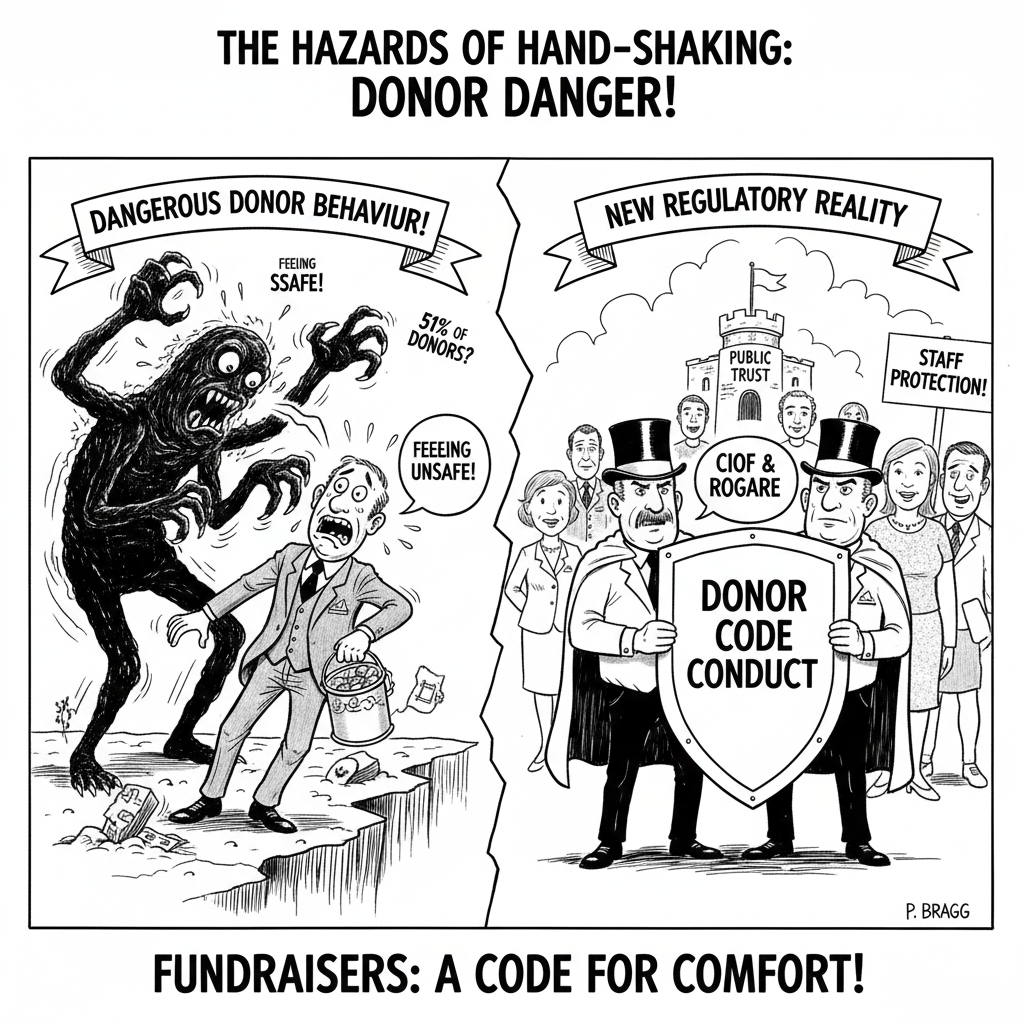
For too long, the inherent power imbalance in the relationship between fundraisers and donors has been an uncomfortable, often unspoken, reality of the charity sector. Now, a stark new survey has brought this issue to a critical tipping point. In a joint call to action, the Chartered Institute of Fundraising (CIOF) and the fundraising think tank Rogare are urging UK charities to confront a culture that has left their staff vulnerable. The catalyst for this movement is a “horrifying” statistic from their recent research: an astonishing 51% of fundraisers report having experienced behaviour from a donor that made them feel physically or mentally unsafe. This finding has sent shockwaves through the sector, underscoring the urgent and profound need for charity professionals, leaders, and trustees to fundamentally reassess how they safeguard their people.
Exposing the Scale of Inappropriate Donor Behaviour
The drive for a formal Donor Code of Conduct is not an anecdotal or reactionary measure; it is a strategic response grounded in quantifiable, deeply concerning evidence from professionals on the front line. The data from a survey by the CIOF and Rogare reveals a problem that is both pervasive and persistent. More than half of the 212 fundraisers surveyed (51%) reported experiencing behaviour from a donor that made them feel physically or mentally unsafe, including sexual misconduct and bullying. For the vast majority of them, this was no isolated incident; among those who shared further details, 88% had experienced it more than once, with over half (53%) viewing it as a regular threat they must be prepared for. The most commonly reported misconduct was sexually inappropriate behaviour, ranging from sexual innuendo and unwanted comments to inappropriate physical contact and, in one case, sexual assault. Critically, the survey found that the most significant amount of this behaviour was committed by major donors and philanthropists or was directed towards fundraisers working with these groups, starkly illustrating the power imbalances at play. While this was the primary source, the problem is sector-wide, with reports also involving event participants and legacy donors. This evidence demonstrates a clear and present danger to the well-being of fundraising professionals, compelling the sector to move from awareness to action.
The Sector’s Pledge to Safeguard Its People
In response to these alarming findings, sector leaders are moving beyond acknowledgement to propose concrete, unified action. The Chartered Institute of Fundraising and Rogare are now urging all UK charities to sign a pledge, committing to the development and implementation of a formal Donor Code of Conduct. This initiative is a proactive step designed to prevent incidents of inappropriate donor behaviour and protect staff. The gravity of the situation is clear from the survey results, described as “simply horrifying and unacceptable” by Katie Docherty, chief executive of the CIOF. She stressed that “fundraisers, whether volunteers or staff, have been shouted at and abused for simply doing their jobs and this can no longer continue.” The issue extends far beyond sexual misconduct. Damian Chapman, chair of Rogare, broadened the scope of the problem to include injustices such as “Bullying both verbal and physical, making disparaging comments about a fundraiser’s protected characteristics…or interfering with their work or career.” This call to action has been developing for some time; the recommendation for a donor code of conduct was a key proposal in Rogare’s influential 2023 report, Blueprint to Dismantle Patriarchal Structures in Fundraising. Now, with powerful new data, that recommendation has become an urgent campaign, with pioneering organisations already demonstrating how such a code works in practice.
How a Code Empowers Fundraisers
The concept of a Donor Code of Conduct is not merely theoretical; early adopters are already demonstrating its tangible benefits for organisational culture and staff confidence. By examining these real-world case studies, other charities can see a clear path forward. A prominent example is Scottish Ballet, which has implemented its own “Donor Guiding Principles.” Antonia Brownlee, the Director of Philanthropy, explains that the principles were developed over a two-year consultation process involving the Board, fundraisers, and even the dancers whom the code is also designed to protect. The mechanism is simple yet effective: the principles are sent to patrons when they join and renew their support, and they are asked to formally acknowledge the code. The impact has been transformative. While no incidents have required the principles to be invoked, Brownlee states that their existence alone has made a significant difference. The code has not only made fundraisers feel “more confident in dealing with any problems that might arise,” but has also served as a proactive, culture-setting tool. As Brownlee explains, “having this donor code of conduct has really empowered us to feel confident in starting values-led conversations at the very beginning in discovery meetings with potential donors.” Scottish Ballet is not alone. The University of Edinburgh is another leading organisation that has successfully created and implemented a code, reinforcing this as a growing and effective practice among forward-thinking institutions.
From Best Practice to Governance Essential
This sector-led push for a Donor Code of Conduct is perfectly timed, aligning with a significant evolution in the UK’s formal fundraising regulation. The pledge is not just a response to the survey; it is a vital tool for meeting new, principle-based governance standards that place the duty of care squarely on charity leadership. On 1 November 2025, the Fundraising Regulator’s new Code of Fundraising Practice took effect, marking a fundamental shift away from a “rule-heavy system” towards a more agile, “principles-based framework”. This new code is built on four core principles that must guide all fundraising activity: Legal, Open, Honest, and Respectful. Crucially, the updated code introduces a new, unambiguous requirement that charities must “take reasonable steps to protect fundraisers from harm and harassment.” Lord Toby Harris, Chair of the Fundraising Regulator, has hailed the new framework as “an important step forward for fundraising standards in the UK.” The implication for charity leadership is profound. This regulatory change shifts the responsibility for ensuring ethical practices and demonstrating sound judgment onto trustees. For charity boards and trustees now tasked with demonstrating how they meet this new, principle-based duty to protect staff, a well-implemented Donor Code of Conduct is no longer merely best practice; it is one of the most direct and compelling pieces of evidence of sound governance and regulatory compliance.
Redefining Respect in Philanthropy
The UK charity sector has reached a defining moment. Confronted by shocking evidence of the mistreatment of fundraisers, it now has a clear and actionable path forward through the Donor Code of Conduct pledge championed by the CIOF and Rogare. This vital initiative does not exist in a vacuum; it is perfectly aligned with new formal regulatory duties that demand charities protect their staff from harm. The movement signals more than just a policy change—it represents a crucial culture shift. It is a decisive move away from a “donor-as-customer” model, where fundraisers are treated as subordinates, towards a modern relationship built on mutual professional respect. Adopting a Donor Code of Conduct is not a risk to donor relations; it is an essential component of contemporary safeguarding, good governance, and the collective effort to build a truly sustainable and ethical charity sector.